Cornell Engineering has announced the winners of its seventh annual Engineering Innovation Competition, which recognizes innovative product concepts and prototypes from students.
New grants from the Cornell Center for Social Sciences (CCSS) will fund research ranging from exploring why people spread polarizing content online to assessing health care access in rural New York.
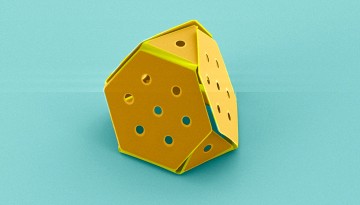
A Cornell-led collaboration harnessed chemical reactions to make microscale origami machines self-fold – freeing them from the liquids in which they usually function, so they can operate in dry environments and at room temperature.
Cornell Racing students made history after winning the 2023 Toyota Green Grand Prix, the first competition in the team’s more than three decades of racing that they drove an all-electric vehicle.
Cornell researchers have developed an optical neural network that can filter relevant information from a scene before the visual image is detected by a camera, a method that may make it possible to build faster, smaller and more energy-efficient image sensors.
Researchers have identified blood biomarkers that could help pediatricians quickly diagnose severe cases of COVID-19 as well as multisystem inflammatory syndrome, also known as MIS-C, which emerged during the pandemic.
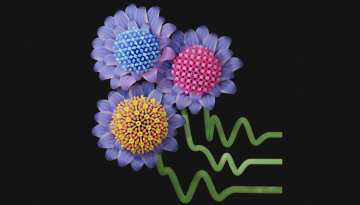
Using a computational approach, material scientists at Cornell have found more than 20 new self-assembled crystal structures, which could serve as nanoparticle or colloid design targets for other researchers.
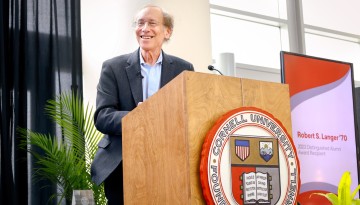
Robert Langer ’70, whose pioneering work in biotechnology, drug delivery and tissue engineering has made him one of the most prolific inventors in medicine, received the Cornell Engineering Distinguished Alumni Award during a celebration hosted April 19.