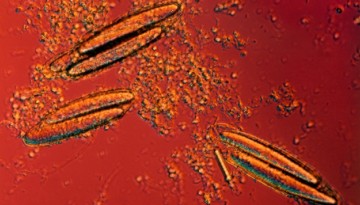
The university launched the Cornell Institute of Host-Microbe Interactions and Disease, an organization that connects the community of Cornell researchers studying host-microbe biology and disease.
A new course, Hydroponic Food Crop Production and Management, teaches the principles and practices of commercial food crop production in controlled environment agriculture.
Buckle up your economic seat belts: Cornell's Charles H. Dyson School of Applied Economics and Management will host the annual Agricultural and Food Business Outlook Conference on Jan. 24.
Cornell's Student Multidisciplinary Applied Research Team was recognized for its impact on poor communities by earning the L.A. Potts Success Story award on Dec. 5.
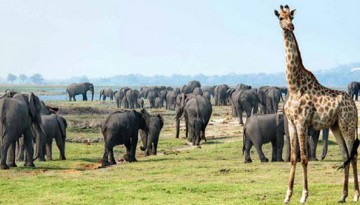
Animal and wildlife officials, and a College of Veterinary Medicine professor have developed policies to ensure safe trade of meat products while also aiding wildlife conservation.
With the help of Cornell's New York State Agricultural Experiment Station in Geneva, New York, cider pressed on campus is once again available to the Cornell community.