For three days in Ithaca in August, 10 cheese judges gathered at Cornell’s Stocking Hall to discern, savor and taste 230 cheeses to determine – for 2015 – New York’s best.
A summit meeting to identify resources and opportunities to improve agricultural resiliency to severe weather across New York state will explore current initiatives and link researchers and extension members.
Two upcoming EnoCert courses for winery employees will be offered Aug. 4 (EnoCert 203 Winery Sanitation and Safety) and Aug. 5 (EnoCert 202 Tasting Room Sales Strategies).
In the war to keep food safe from bacteria, Cornell food scientists examine a class of weaponry called bacteriophages – an all-natural biological enemy for Listeria.
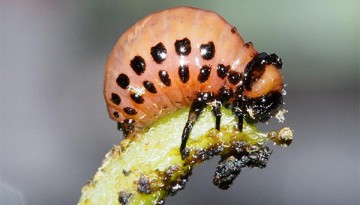
A novel insecticide targets a specific gene in a pest, killing only that bug species on crops and avoiding collateral damage to beneficial insects caused by today’s pesticides.
A new study published in BMC Biology describes greenhouse trials of a genetically engineered diamondback moth that suppresses populations of pest diamondback moths and reduces their resistance to Bt.
Students Kelley McElfresh ’16, Devin Hegelein ’17 and Katie Kraft ’17 are making substantial contributions to sales and manufacturing at Ithaca Hummus in Groton, New York.