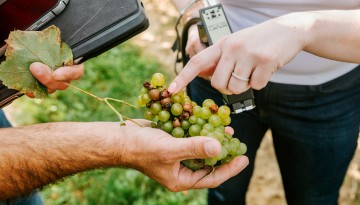
The robots will roll through vineyards and gather data to allow breeders and growers to evaluate their crop leaf by leaf, in real time, down to the chemical level.
At COP27 meeting in Egypt, Engineering Professor Semida Silveira delivered a United Nations working group statement to accelerate global net-zero carbon emissions principles.
Cornell researchers compared federal floodplain home buyout policies with regional programs, showing that local strategies may make these acquisitions more equitable and effective.
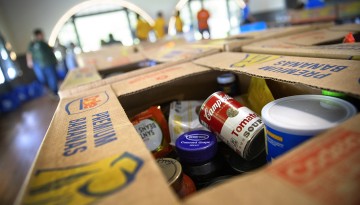
Research by Cornell and the U.S. Department of Agriculture offers the first estimates of food pantries' economic value to families, highlighting their important role in addressing food insecurity.
The U.S. Department of Agriculture has awarded $3.8 million in funding to the Cornell University Agricultural Experiment Station to support more than 50 projects across three colleges.
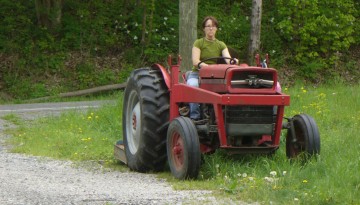
In 2015, Nina Saeli attended a veterans-only event sponsored by the Cornell Small Farms Program (CFSP). It was the beginning of a journey of literal and personal growth.
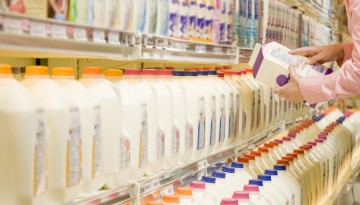
Consumers would be willing to buy milk from cows only treated with antibiotics when medically necessary – as long as the price isn’t much higher than conventional milk, according to researchers at the College of Veterinary Medicine.
At the upcoming Conference of the Parties – best known as COP27 – 11 Cornell students will help delegations from small countries gain a stronger environmental voice.