Cornell hosted the second New York Soil Health Summit Dec. 13, bringing together those who aim to assist growers in mitigating and adapting to climate change while protecting farmer livelihoods and rural economies.
Randy Barker ’53, an agricultural economist who spent half his career in Asia supporting food security and sustainable rice growing, died July 5 in Providence, Utah. He was 92.
An apple a day may keep the veterinarian away. Juice, pulp and other waste from Empire apples, when injected into chicken eggs before hatching, show signs of boosting the animal’s health.
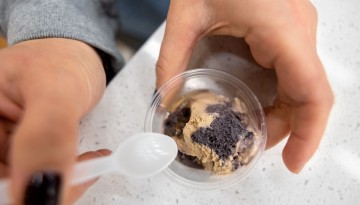
For their ice cream final project, students in Cornell’s introductory food science class – this year sweetened by a Renaissance theme – harkened back 500 years to explore flavors from antiquity.
Cornell doctoral candidate Bethany Jorgensen co-authored the 2022 Lanzarote Declaration – a synthesized wish list of action in anticipation of a U.N. treaty on global plastic pollution in 2024.
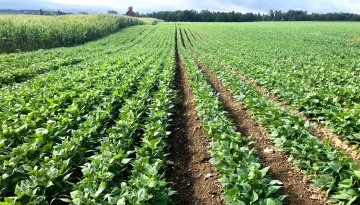
Cornell AgriTech is leading a multidisciplinary research project to increase the sustainability of the organic dry bean industry in the Northeast and upper Midwest by overcoming production challenges while developing improved management practices that build soil health and resilience to climate change.
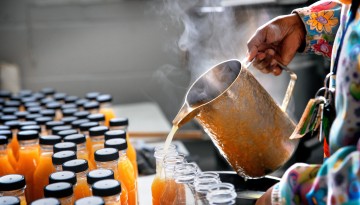
For more than 30 years, the Cornell Food Venture Center (CFVC) has helped entrepreneurs transform family recipes and homemade eats into successful commercial food products. Now, a new online program from Cornell is expanding access to the CFCV’s expertise and supporting the growth of food entrepreneurs around the globe.
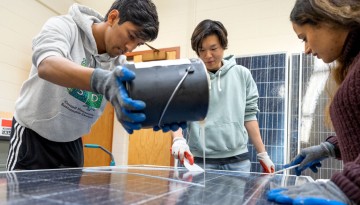
Using polyurethane, resin, epoxy – and gallons of wit – the Solar Panel Reboot student team, part of the Cornell University Sustainability Design, provides an afterlife to old, broken photovoltaic boards.
Unrelenting climate change is leading to extended, late-summer weeks of water stratification, which prompts varying degrees of oxygen deprivation in lakes, says new Cornell research.