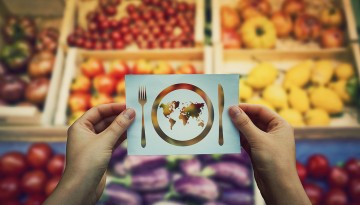
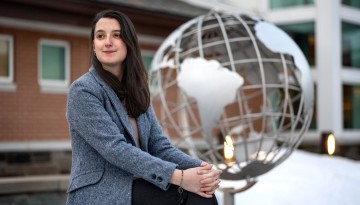
Global food systems expert Johan Swinnen, Ph.D. ’92, will explore lessons learned during the pandemic and the steps needed to prevent a hunger catastrophe in the first talk of a new speaker series dedicated to confronting the world’s most urgent and complex challenges.
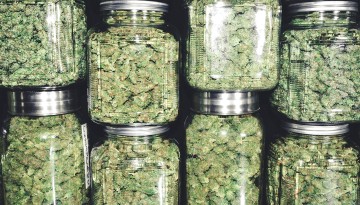
Cannabis employers see lack of training and skills, as well as lack of awareness of career opportunities, as two of the largest obstacles to achieving social equity in the adult-use market.
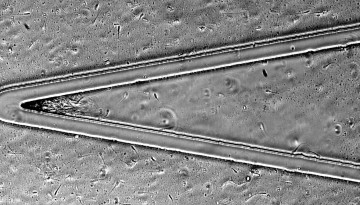
Forget sending bull semen out for complicated laboratory tests to learn whether the agricultural animal is virile. Cornell scientists have developed a faster, easier microfluidics method.
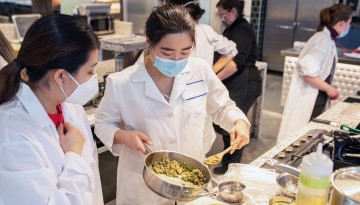
Students are now taking classes the Discovery Kitchen, a state-of-the-art teaching space built into the ground floor of Toni Morrison Hall on North Campus.
A Cornell-designed probe shows how water vapor penetrates powders and grains – a finding that could have wide-ranging applications in pharmaceutical research, agriculture and food processing, and planetary exploration.
Students aim to reduce aviation emissions, support farmworkers and improve a New York animal shelter with the David M. Einhorn Center for Community Engagement’s Serve in Place awards.
With the Hudson River rising from a fast-warming climate, the cities and towns along its banks now have an opportunity to save and reimagine their municipal waterfronts.
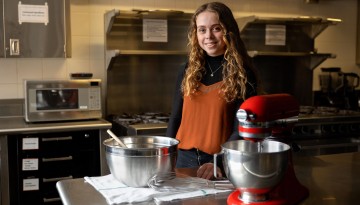
Cassidy Tryon won Food Network’s “Chopped Junior” at age 12, shortly before being diagnosed with Crohn's disease. She's now studying food science at Cornell while continuing to master cooking for her diet.
After honing her wine skills through eCornell classes, NASA engineer Rada Griffin launched Anissa Wakefield Wines, becoming the first certified Black woman winemaker in Alabama.