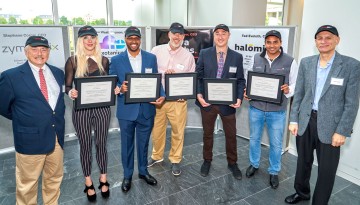
As the pandemic pomp and COVID circumstances dissipate, Cornell’s McGovern Center and Praxis Center incubators graduated five startups, putting them on the road to success.
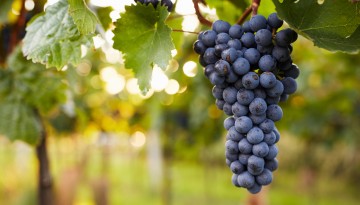
Applications are being accepted through Aug. 1 for the inaugural New York Concord Grape Innovation Award, a first-of-its-kind business competition aimed at stimulating innovation and development of new products and markets for one of New York’s largest and most historic grape industries.
As the cherished rainforest in South America’s Amazon River region continues to shrink, the river itself now presents evidence of other dangers: the overexploitation of freshwater fish.
Summer Session, running May 31 through August 2, 2022, is open to Cornell and visiting undergraduate and graduate students, high school students and any interested adult. Undergraduates can earn up to 15 credits in on-campus, online, and off-campus courses before the fall semester.
Solving problems like climate change could require dismantling rigid academic boundaries, so that researchers of various backgrounds may collaborate through an “undisciplinary” approach.
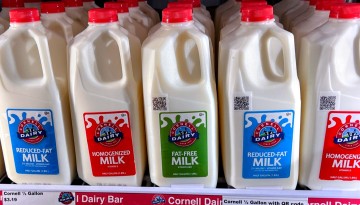
Milk carton “use-by” dates soon may be a quaint relic. A new Cornell study finds that consumers like QR codes, better depicting how long milk is drinkable – creating less food waste.
Cornell startup Antithesis Foods and Bactana were awarded NSF small-business grants, as Guard Medical raises $11 million in Series B investments and C2i launches a disease test in Europe.
Production of animal protein in China has increased by 800% over the past 40 years, but new research shows why the amount of climate-warming nitrous oxide released from this animal farming has not risen as quickly.
In its four years, the competition has received applications and interest from more than 1,000 businesses in 32 states and 37 countries. In all, 59 finalists have been selected to date, with 21 winners sharing $9 million in startup funding.