The Cornell Atkinson Center for Sustainability and Environmental Defense Fund collaborate on four Innovation for Impact Fund (IIF) awards to foster creative collisions that provoke large-scale, long-term change.
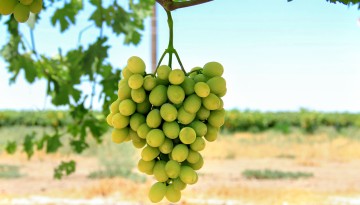
Two newly released grape varieties, developed collaboratively between Cornell AgriTech and Sun World International, a global fruit genetics and licensing company, offer new flavors for consumers and better growing characteristics for farmers.
Meiogenix, a next-generation technology startup that helps agricultural crops find their own genetic solutions, via chromosome editing, has joined Cornell’s McGovern Center incubator.
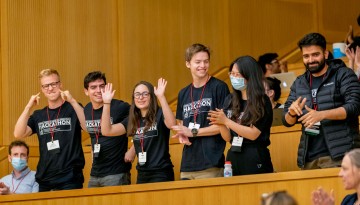
Students from 28 fields across six different schools gathered at the fourth annual Digital Agriculture Hackathon, March 11-13, to find solutions to global food system issues while competing for cash prizes.
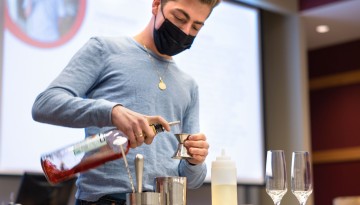
The student-created signature drinks for Hotel Ezra Cornell 97 to celebrate the Nolan School of Hotel Administration’s centennial, feature the humble pineapple, long a hospitality symbol.
Students are invited to enroll now for Cornell’s Summer Session where they can earn up to 15 credits. Courses are offered online, on campus and around the world in three-, six- and eight-week sessions between May 31 and August 2, 2022.
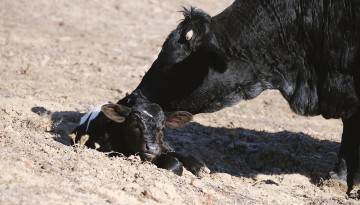
Globally, by the end of this century low-income cattle farmers in poor countries may face financial loss between $15 to $40 billion annually, due to looming climate change.
USDA Under Secretary for Rural Development Xochitl Torres Small met with members of the Cornell community to discuss critical challenges facing rural areas such as climate change, food supply chain instability and access to resources.
Cornell CALS Professor Emeritus Norman Scott and his wife, Sharon, have endowed a professorship that will support transdisciplinary, innovative research and teaching in food, agriculture and life sciences.