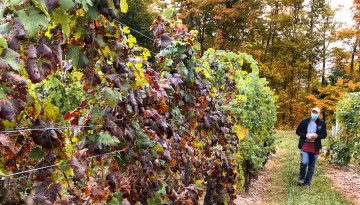
Removing not only a diseased grapevine but the two vines on either side of it can reduce the incidence of leafroll disease, a long-standing bane of vineyards around the world, Cornell researchers have found.
Declaring this the “decisive decade” for climate action, Cornell launched The 2030 Project: A Climate Initiative, which will mobilize world-class faculty to develop and accelerate tangible solutions to the climate challenge.
Cornell CALS Professor Scott J. Peters to lead participatory action research into issues of justice, sovereignty, equity and sustainability in food and farming systems at University of Minnesota.
An agricultural economist, a theoretical physicist, a plant biologist and a physiologist have each been elected to the National Academy of Sciences, the academy announced May 3.
Imagining superheroes and sharing leftovers, building a library and embarking on a new educational adventure - that's how four Cornell Jeb E. Brooks School of Public Policy students plan to use funds they received through the Contribution Project.
As water restrictions tighten in Southern California, the Southwest U.S. sees growing evidence of climate change and drought for millions of western residents, according to a Cornell drought expert.
A new open-access book constitutes the most authoritative study on the future of local and global agri-food systems, exploring the challenges of today and envisioning potential food systems scenarios through 2070.
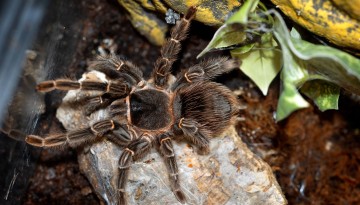
A survey has found that endangered and threatened insects and spiders, as well as common species that provide valuable ecological services, can be easily purchased – without adequate oversight – through basic internet searches, according to a new Cornell study.