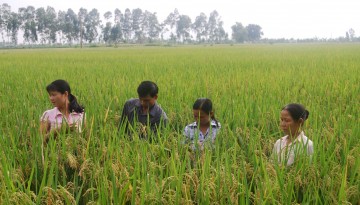
The System of Rice Intensification (SRI) has been named as a 2020 climate policy "breakthrough" for government initiatives in Vietnam to increase agricultural production there while reducing methane emissions from rice paddies.
Jenny Goldstein, an assistant professor of global development in the College of Agriculture and Life Sciences, has been named a 2021-22 faculty fellow in the Cornell Center for Social Sciences to develop an ambitious research project focused on environmental rehabilitation in Indonesia.
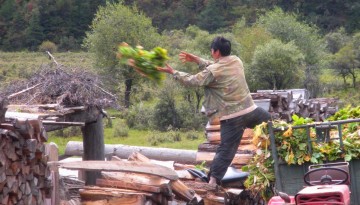
As an environmental sociologist and professor of global development, Jack Zinda is analyzing global challenges surrounding relationships between human groups and environments from rural communities in China to metropolitan areas straddling the Hudson River in New York State.
Jaron Porciello, an information and data scientist in the Department of Global Development, has been named as an area editor for Data & Policy, an open access journal dedicated to the potential of data science to address important policy challenges.
Cornell and WWF will host a virtual conference Feb. 23 focused on the link between humans and wildlife, and the subsequent prevention of future pandemics.
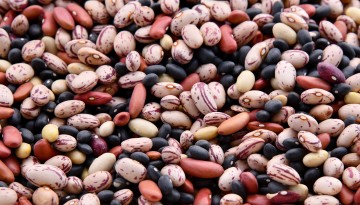
New research from Elad Tako, associate professor of food science, shows that iron and zinc in biofortified foods, such as beans and wheat, can improve the health of gut bacteria and reduce the risk of malnutrition.
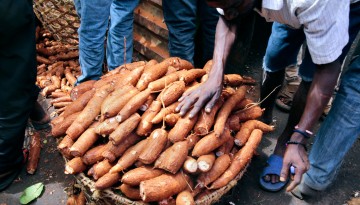
A $2.65 million gift to support Cornell and partner research in Tanzania will improve distribution of new and more resistant varieties of cassava while empowering women and marginalized groups in the East African nation.
Richard Stup, agricultural workforce specialist, analyzed the key issues facing New York state farmers this year during Dyson's 2021 Agricultural and Food Business Outlook Conference, held virtually Jan. 25.