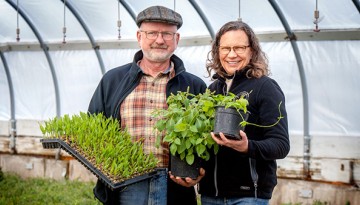
As hunger rose during the pandemic, alumni Rick and Laura Pedersen responded by sharing the bounty of their farm with local food bank in upstate New York. They have been named Cornell Alliance for Science Farmer of the Year.
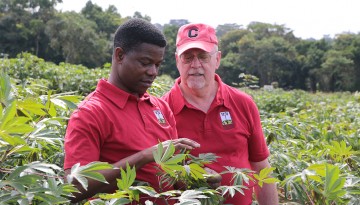
Five new cassava varieties developed with support from NextGen Cassava, an international partnership led by Cornell, have been approved for release in Nigeria.
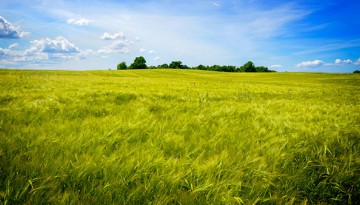
The first variety of spring malting barley bred by Cornell to succeed in New York’s wet climate and support the state’s $5.4 billion craft beer industry now has a name: Excelsior Gold.
To deflect future world food crises created by climate change, a Cornell-led international group has created a road map for global agricultural and food systems innovation.
Food businesses and consumers coping with COVID-19 impacts in five countries in Asia and Africa now have access to customized resources, and experts mentored by the Institute for Food Safety at Cornell University.
Cornell Atkinson is soliciting nominations for The Earthshot Prize, a new global award supported by The Duke and Duchess of Cambridge to tackle the world’s biggest environmental challenges.
The 2020 State of New York Sustainability Conference – held online Dec. 2-4 – focused on connecting human health, social justice, feeding the world and protection of the environment.
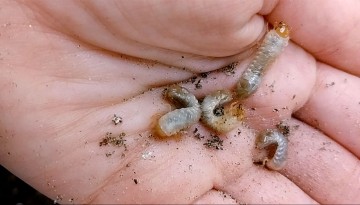
A team of Cornell scientists will use acoustic technology to develop efficient and affordable ways to manage soil-dwelling pests and their predators, thanks to a two-year grant from the USDA.
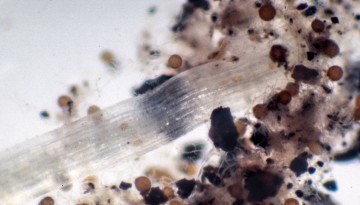
A new grant will investigate how bacteria that live inside the cells of fungi may shape the biology, evolution, biodiversity and function of these fungi – research with important practical applications for industry, sustainable agriculture and preventing food spoilage.