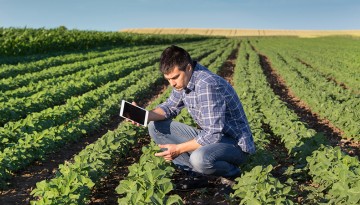
An app that would maximize profit and minimize food spoilage and loss across the agriculture supply chain was named the grand prize winner in the third annual Cornell Institute for Digital Agriculture Hackathon.
Jeffrey Perry ’89, Ph.D.’ 18, senior lecturer of global development, received the Golden Owl award on Feb. 23 in honor of his contributions to agricultural education in New York state.
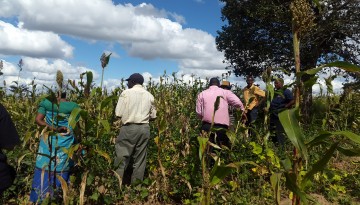
Two graduate students have received funding for research focused on increasing food security in Africa from the Cornell Atkinson Center for Sustainability.
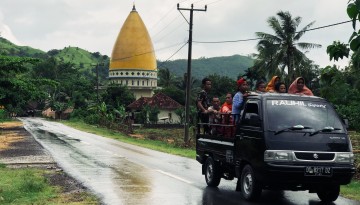
Jenny Goldstein, assistant professor of global development, studies the intersection of power dynamics, the environment, and the meaning of place and space in Indonesia.
In partnership with New York community groups, Cornell researchers are developing a hyperlocal weather forecasting system designed to help emergency response.
Robert Seaney, Ph.D. ’55, professor emeritus of soil and crop sciences who’s best known for his research on identifying the best forages for New York state soils and climate, died Jan. 19 in Petersburg, Illinois. He was 93.
Rural Humanities will offer a webinar, “Black Land Matters: A Rural Humanities Webinar on Black Farming and Food Security,” on March 4 featuring author Natalie Baszile and activist Karen Washington, co-founder of Black Urban Growers.
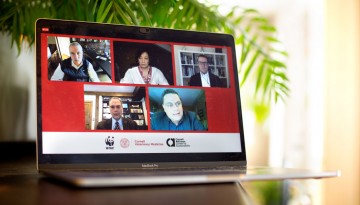
Future pandemics can be averted if the world’s governments eliminate unnecessary wildlife trade and adopt holistic approaches, according to experts at a Feb. 23 virtual conference.
An animal scientist studying relationships between insulin and milk production in dairy cows has received a three-year, $500,000 grant from the U.S. Department of Agriculture National Institute of Food and Agriculture.