Kavous Keshavarz, professor emeritus in the Department of Animal Science and an expert in poultry nutrition, died Jan. 7 in Atlanta, Georgia. He was 82.
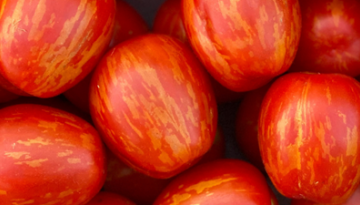
Cornell AgriTech releases a new variety of heirloom tomato, dubbed Cherry Ember, which stands out for its striking colors, bright flavors, high yield and tough-to-crack skin.
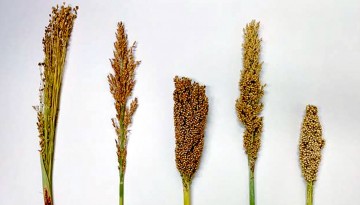
A new study found that harmful mutations in sorghum landraces – early domesticated crops – decreased compared to their wild relatives through the course of domestication and breeding.
Cornell AgriTech, a preeminent center for agriculture and food research, recently launched a new committee to drive diversity, equity and inclusion initiatives on the Geneva campus.
The grant from The Andrew W. Mellon Foundation’s Just Futures Initiative will bring together scholars from across the university and beyond to study the links between racism, dispossession and migration.
Halomine, a Cornell-based startup developing cutting-edge technologies for the sanitation of food processing equipment, has been awarded $600,000 from the USDA’s National Institute of Food and Agriculture.
Benjamin Z. Houlton, the Ronald P. Lynch Dean of the College of Agriculture and Life Sciences, joined a panel helping to identify key pathways for terrestrial carbon dioxide removal that merit further investment.