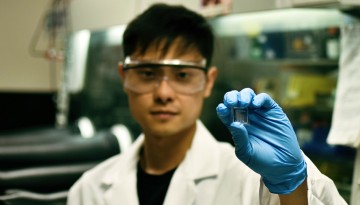
The debate over how one of the most popular osteoarthritis treatments should be federally regulated could change, thanks to Cornell research that provides a better understanding of the science behind hyaluronic acid injections.
Five doctoral students in engineering will spend a fully funded semester examining the business prospects for a diverse array of Cornell technologies as the newest class of commercialization fellows.
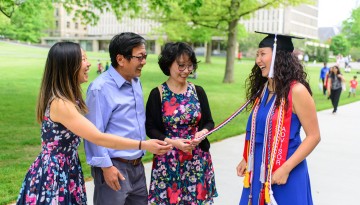
As students began to line up for Cornell’s 2019 Commencement May 26, the morning skies that threatened rain gave way to rays of sunshine wriggling between the clouds. Smiles, pomp and circumstance followed.
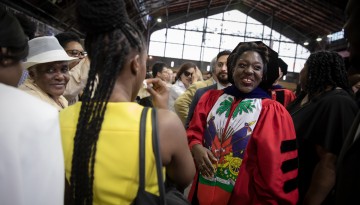
Approximately 300 doctoral candidates participated in a festive Ph.D. hooding ceremony May 25 in Barton Hall with President Martha E. Pollack and Provost Michael Kotlikoff offering comments and congratulations.
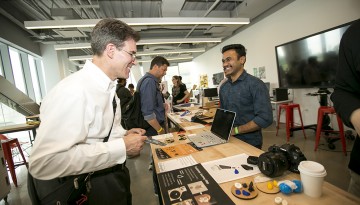
An intelligent assistant to manage gut disorders and an app that facilitates personal growth through continuous feedback from co-workers were among the winners of the fifth annual Startup Awards competition, held May 17 at Cornell Tech.
The students in Cornell’s first two cohorts of the community food systems minor now have global experience in the world of sustenance, which they’ve shared in a book, “In the Field.”
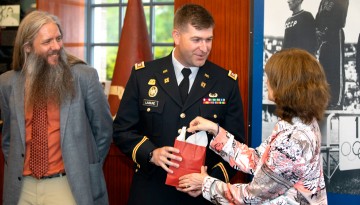
Thirty-three university staff members were recognized for earning academic degrees at the 23rd annual Staff Graduate Reception, May 20 in the Hall of Fame Room in Friends Hall.
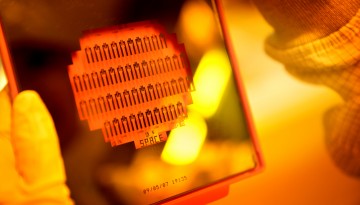
Since last August, graduate student Nicole Chu has been fabricating the foundation of a wearable air quality monitoring device, by using tools at the Cornell NanoScale Science and Technology Facility.
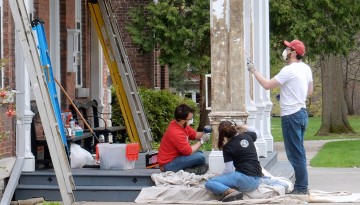
Historic Preservation Planning students spent their annual Work Weekend doing restoration work on the historic Oneida Community Mansion House in Oneida, New York.