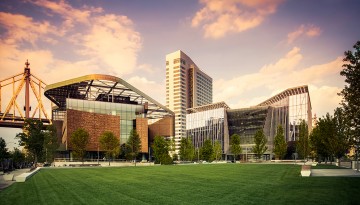
Oculi, a sculptural pavilion by architecture, art and engineering faculty at Cornell, will move this spring from New York City to Art Omi, an art organization in Ghent, New York.
One of the most successful fundraising events in Ithaca, Women Swimmin’, will now be one of the best-organized as well, thanks to optimization help from Cornell Engineering students.
Like high-frequency traders on Wall Street, a growing army of bots exploit inefficiencies in decentralized exchanges, which are places where users buy, sell or trade cryptocurrency independent of a central authority, a Cornell Tech study has found.
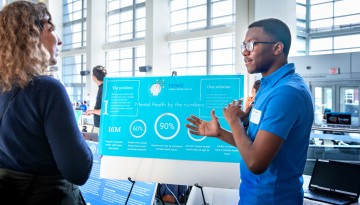
At the annual BOOM (Bits on Our Minds) showcase April 24 in Duffield Hall, more than 200 students used technology to try to solve problems large and small, local and international, for entertainment, convenience, increased equity or social good.
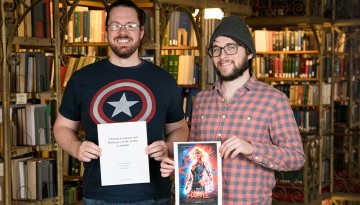
Cornell linguistics doctoral students Ryan Hearn and Joseph Rhyne created the alien language Torfan, used in one of the newest movies to come out of Marvel Cinematic Universe, “Captain Marvel.”
Eighty-six Cornell graduate students have been awarded travel grants from the Mario Einaudi Center for International Studies for the 2019–20 academic year.
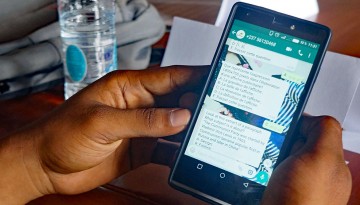
When it comes to studying for their all-important baccalaureate exam, students in Cameroon are largely left to their own devices. Now a team of Cornell researchers wants to use those devices to help them prepare for the test.
A new fellowship funded by Don Follett ’52 and Mibs Follett ’51 aims to encourage Cornell Engineering graduates to pursue master’s degrees at Cornell Tech, boosting the pipeline of students and cementing connections between the two campuses.
If everyone uses algorithmically generated profiles, users trust them, according to a new study from Cornell researchers. However, if only some hosts choose to delegate writing responsibilities to artificial intelligence, those with AI-generated profiles are likely to be distrusted.