Published research by chemist Nozomi Ando, performed at CHESS, has identified a new vulnerability in bacteria that offers a possible avenue for dealing with antibiotic resistance.
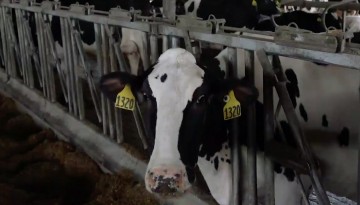
In a new collaboration, students from Dairy Herd Management teamed up with students in Topics in Cloud Computing to learn how to work together to develop the kinds of digital tools that could reshape farming.
A hybrid system using geothermal energy for both heating and electricity could reduce campus greenhouse emissions around 25% more than using it just for heating, potentially bringing Cornell close to its goal of carbon neutrality, according to new research.
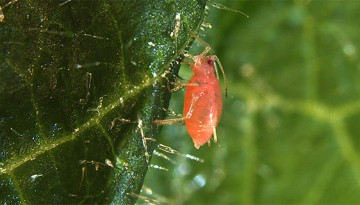
Researchers in Michelle Heck’s lab at the Boyce Thompson Institute are working to better understand how plant viruses interact with aphids on a molecular level, which could lead to better pest-control methods.
Greg Morrisett, dean of Cornell’s Faculty of Computing and Information Science, has been named the Jack and Rilla Neafsey Dean and Vice Provost of Cornell Tech, Provost Michael Kotlikoff announced June 7.
Eighteen Cornell doctoral students from 13 fields of study have received 2019-20 Engaged Graduate Student Grants to support community-engaged research relevant to their dissertations.
Eleven students from five countries made history May 25 as they became the first graduates of Cornell’s Master of Public Health (M.P.H.) program in a ceremony at the College of Veterinary Medicine.