Entrepreneurs will gather to hear fireside chats with top business leaders, enjoy multiple networking and engagement opportunities and hear startup pitches at Entrepreneurship at Cornell’s Eclectic Convergence 2023.
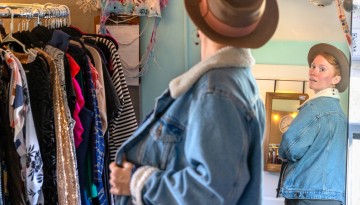
While pursuing her master’s in apparel design, Tulasi Elangovan, M.A. ’23, researched and designed a prototype for a shoulder pad made especially for female hockey players, with help from members of the Big Red women’s team.
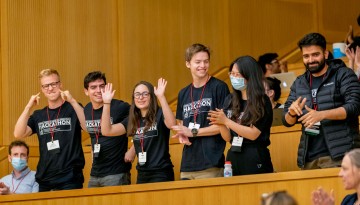
The hackathons, run by Entrepreneurship at Cornell, are open to undergraduate and graduate students from any field and major and take place from Friday evenings through Sunday afternoon.
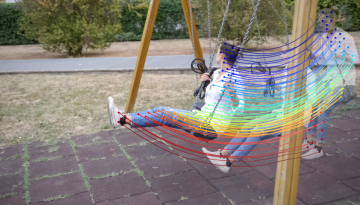
Cornell researchers have developed an optimization tool, OmniMotion, to estimate motion throughout an input video, which has potential applications in video editing and generative AI video creation. It was presented at a conference last week in Paris.
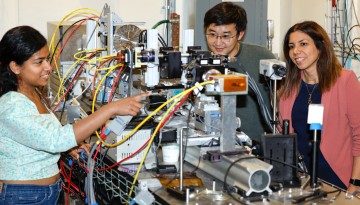
Cornell researchers used X-ray diffraction to study how microscale phenomena such as bending and fragmentation emerge in the nickel-based superalloy IN625 as it is being 3D printed.
A survey of New York state residents by College of Veterinary Medicine researchers found that nearly half of respondents increased the amount of time they spent on wild and backyard food and related activities early in the pandemic.
A Cornell-led collaboration built a 3D in-vitro model of a functional human lymphatic vessel that revealed a surprising mechanism that can jam up the necessary drainage