Cornell scientists have replaced the harsh chemical processing of rare earth elements – used to power electric cars, wind turbines and smartphones – with a benign practice called biosorption.
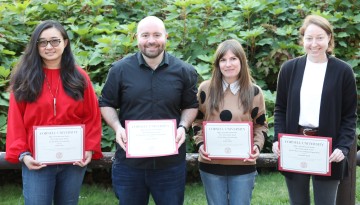
Six postdoctoral scholars were honored with Postdoc Achievement Awards as part of Cornell’s participation in National Postdoc Appreciation Week. The awards recognize excellence in community engagement, leadership and mentoring.
Twenty-eight student teams have been selected to participate in the 10th credit-bearing cohort of eLab, which accepts student founders from any field of study across Cornell and trains them to launch real businesses.
Doctoral candidate Alexander Cruz and Professor Jonathan Butcher and doctoral candidate Don Long and Professor Praveen Sethupathy were selected for the 2023 Howard Hughes Medical Institute Gilliam Graduate Fellows Program.
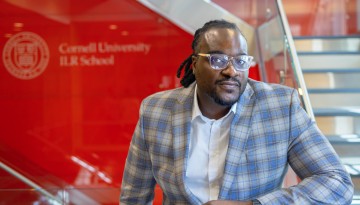
After serving two prison terms totaling more than four years, Thomas Jones, master's student in the ILR School, committed to turning his life around – through education and giving back.
An international team of researchers, including chemist Robert DiStasio of Cornell, has introduced a novel concept, “freedom of design,” that has important implications in the fields of rational molecular design and computational drug discovery.
Depending on lifestyle choices and work arrangements, remote workers can have a 54% lower carbon footprint compared with onsite workers, according to a new study by Cornell and Microsoft.
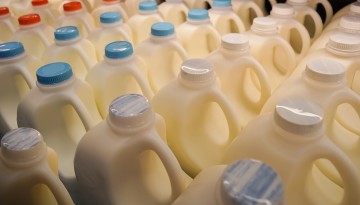
A new filtration process that aims to extend milk’s shelf life may result in a pasteurization-resistant microbacterium passing into milk if equipment isn’t properly cleaned early, Cornell scientists say.