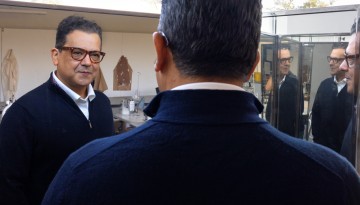
In a fast-fashion, throw-clothes-away world, textile expert Juan Hinestroza (Human Ecology) and a group of scientists have new ways to recycle wasted polyester into new useful products.
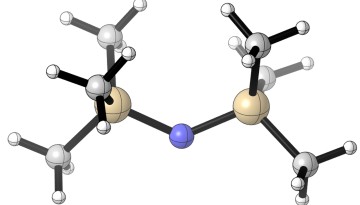
Cornell researchers attached large fragments to temperamental "radical" molecules, increasing their girth to insulate them from their hyperreactive partners – a method that could help create improved derivatives of pharmaceutical compounds.
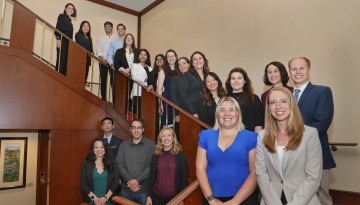
The summer 2023 Colman Inclusive Leadership Program helped 28 doctoral students enhance their leadership skills through readings, group activities, case studies and discussion about practical skills and leadership theories.
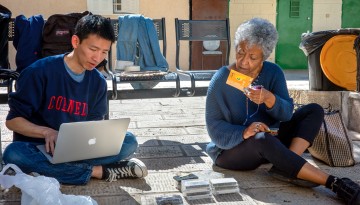
Thomas Feng, a doctoral student in performance practice, is identifying and cataloging the piano music of the late Emahoy Tsege-Mariam Gebru, a composer with a cult following.
Unused solar, wind and hydroelectric power in the U.S. could support the exponential growth of transactions involving non-fungible tokens, Cornell Engineering researchers have found.
Using a deep learning computer model and dashcam images from New York City rideshare drivers, Cornell Tech researchers were able to see which neighborhoods had the highest numbers of New York Police Department marked vehicles.
In a study by Cornell psychology researchers, female applicants for scholarships or jobs were viewed less favorably than males when study participants, acting as decision-makers, were shown “sexy” social media photos of the applicants.
The fifth Future Professors Institute invited aspiring faculty to engage with current faculty from a diversity of backgrounds and institutional types and think about the balance between workload, writing and the workforce.