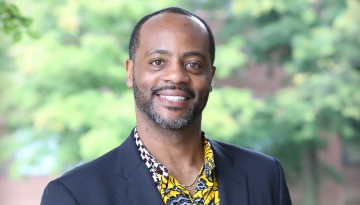
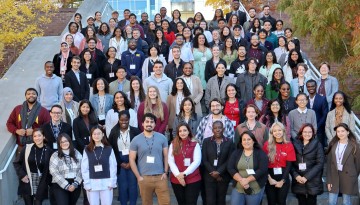
Electrical and computer engineering alumnus Coalton Bennett, Ph.D. ’10, spoke about the importance of mentoring during the alumni keynote at the 2023 Summer Success Symposium, an opportunity for incoming students.
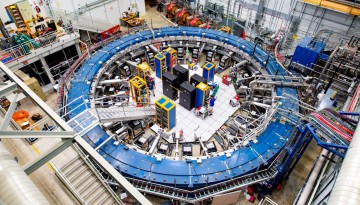
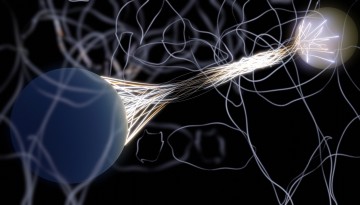
A Cornell team is playing a key role in the Muon g-2 Collaboration by designing some of the technology that captures the muon data, and helping to radically improve the precision of the measurements.
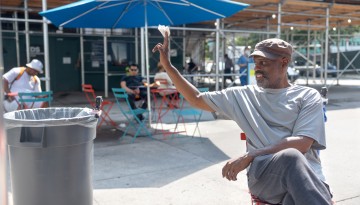
Cornell Tech researchers deployed “trashbots” in Brooklyn for two weeks in July. The goal of the experiment was to see how people interact with, and make sense of, service robots in public spaces. The cleaning was an added bonus.
Robert Weiss has been appointed to a new senior associate dean position in the Graduate School to develop and implement a comprehensive plan to enhance programming and support for life science graduate fields at Cornell.
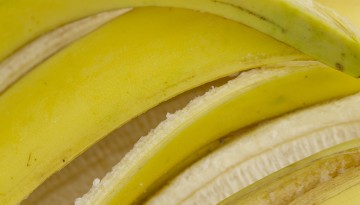
CaféNana, a banana-inspired, caffeinated pick-me-up snack, partly made with food waste by Cornell students, has won the Institute of Food Technology’s Mars Wrigley Product Development competition.
Cornell researchers used magnetic imaging to obtain the first direct visualization of how electrons flow in quantum anomalous Hall insulators, and by doing so they discovered the transport current moves through the interior of the material.
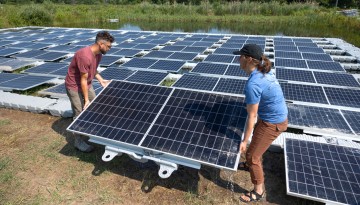
Steve Grodsky, assistant professor of natural resources, and a multidisciplinary team of researchers, soon will learn how solar panels placed on top of water bodies can affect the biology of aquatic systems.
The Consider Cornell programming series, created by the Graduate School Office of Access and Recruitment, seeks to provide guidance to prospective graduate students on the next step in their academic journeys.
Is artificial intelligence beginning to “understand” humor? In experiments using the New Yorker Cartoon Caption Contest as a testbed, researchers found that it’s making some progress, but isn’t quite there yet.