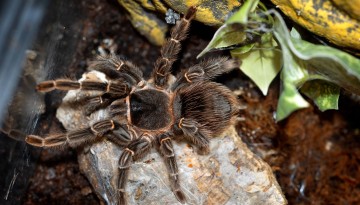
A survey has found that endangered and threatened insects and spiders, as well as common species that provide valuable ecological services, can be easily purchased – without adequate oversight – through basic internet searches, according to a new Cornell study.
The Graduate School is expanding an existing student-led program which prepares and supports prospective students from historically underrepresented backgrounds to include all graduate fields starting in the summer of 2022.
Research by Cornell Institute for Public Affairs students highlights unsustainable cost increases challenging rural ambulance services in upstate New York and beyond, and offers solutions.
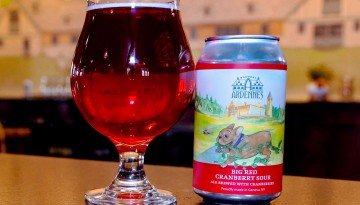
Cornell’s fingerprints are all over the tasty Big Red Cranberry Sour ale. It uses a Cornell-bred barley, alum-grown hops, and made by Big Red Brewing students with an alum-owned brewery.
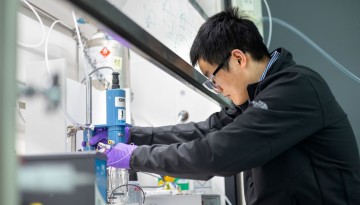
In making hydrogen a viable, clean-energy alternative to carbon-based fuels, Cornell and two research-startups have joined a consortium that aims to propose a Northeast research hub.
Armed drone strikes earn more public support and legitimacy when they have approval from international organizations, according to a survey conducted by Cornell researchers.
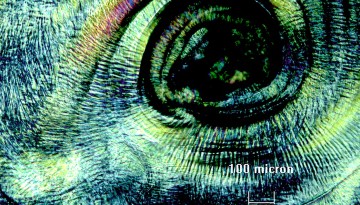
A Cornell-led project has created synthetic nanoclusters that can mimic hierarchical self-assembly all the way from the nanometer to the centimeter scale, spanning seven orders of magnitude.
As consumers want fewer food preservatives and less plastic waste, Cornell scientists have created a bioderived polymer that helps salad dressings and beverages last longer in the fridge.
Four doctoral candidates and one doctoral alumnus were inducted into the Cornell chapter of the Bouchet Graduate Honor Society, which recognizes scholarly achievement and promotes diversity in doctoral education.