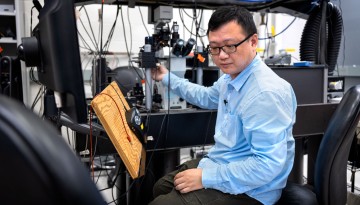
The discovery made by two doctoral students could have future implications for human health, setting a path for research into understanding brain function.
Cornell researchers designed a micro-sized artificial cilial system that could eventually enable low-cost, portable diagnostic devices for testing blood samples, manipulating cells or assisting in microfabrication processes.
A new exhibition displays selections from Cornell’s plaster cast collection of Greco-Roman sculptures alongside – and sometimes within – contemporary artists’ responses to cast culture and classical art.
The Graduate Diversity and Inclusion Awards recognized members of the graduate community for their accomplishments, leadership and commitments to advancing efforts around diversity, inclusion, outreach and student engagement.
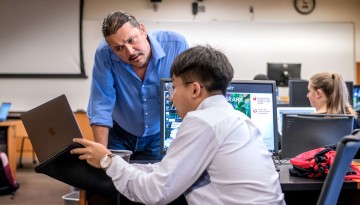
While they value in-person interactions, undergraduate students want to keep some of the adaptations developed during online teaching, including online assignment submission and digital question answering, survey research finds.
Researchers developed porous, sponge-like materials that can trap carbon dioxide – a potentially low-cost approach for limiting the environmental damage of coal-fired power plants.
Scientists soon will see Earth’s atmospheric dust in high-resolution, thanks to new spectrometer expected to launch June 7 aboard a SpaceX rocket to the International Space Station.
Awards from the Mario Einaudi Center for International Studies will support faculty-led research and international events, send graduate students to research destinations around the world and connect undergraduates with in-person and virtual internships from Ecuador to Zambia and beyond.