A persistent rapid-fire fast radio burst source – sending out a cosmic ping from more than 3.5 billion light years away – helps reveal the secrets of the broiling space between galaxies.
Computing-related retraumatization can be lessened or avoided in a few low- or no-cost ways, according to research co-led by Nicola Dell and Tom Ristenpart of Cornell Tech and the Cornell Ann S. Bowers College of Computing and Information Science.
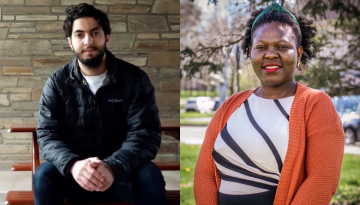
Doctoral students Rafid Bendimerad and Angela Nankabirwa were selected to receive 2022 Africa Fund Fellowships, which provide support to doctoral student applicants who are citizens of an African country.
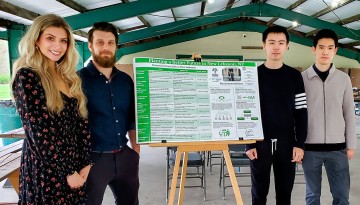
Master’s students are helping New Lebanon, New York expand its economy with green technology jobs, and drafting a blueprint for similar communities statewide.
Ithaca-based SimpliFed – a virtual platform providing personalized advice, service and support to parents – is responding to the baby formula shortage by offering free expert advice and hosting a free virtual class to help new parents prepare for feeding their babies.
Solving problems like climate change could require dismantling rigid academic boundaries, so that researchers of various backgrounds may collaborate through an “undisciplinary” approach.
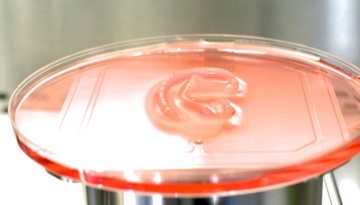
In a first-of-its-kind clinical trial, a human has received a 3D-bioprinted ear implant grown from the patient’s own living cells – thanks to a technology platform developed by a Cornellian-founded startup company.
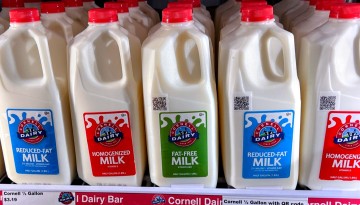
Milk carton “use-by” dates soon may be a quaint relic. A new Cornell study finds that consumers like QR codes, better depicting how long milk is drinkable – creating less food waste.
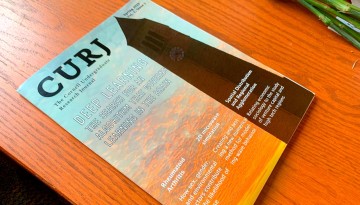
The Cornell Undergraduate Research Journal, a biannual digital and print publication, received 20 submissions for its inaugural issue. From those, the editorial board selected nine articles featuring a wide range of topics.