A new graduate award will empower Cornell graduate students in global development to pursue innovative thinking in their studies and careers.
The Ronny Adhikarya Niche Award (RANA) provides $10,000 in funding to either a…
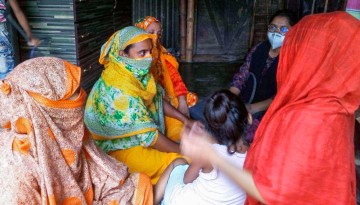
New Cornell research finds that in remote parts of Bangladesh with little internet access, people have relied on local experts, spiritual views and their sense of social justice to evaluate new coronavirus information.
Human development doctoral alumna Kaylin Ratner, Ph.D. ’20, was selected as a finalist for the inaugural SUNY Chancellor Ph.D. Graduate Dissertation Awards, which recognizes outstanding doctoral candidates in the SUNY system.
Cornell researchers found that an experimental model used to explain the inner workings of Planckian metals doesn’t capture what’s really happening inside them.
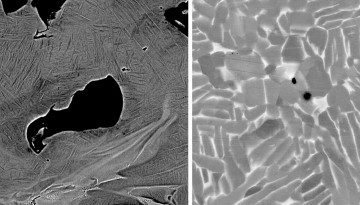
Cornell researchers found that by deliberately introducing more defects into a 3D-printed metal alloy, followed by a post-processing treatment, they could create a stronger, more ductile material.
A team of graduate students in food science, mechanical engineering and biological engineering is among the winners of Phase 1 of the NASA Deep Space Food Challenge.
Ranjit Singh, Ph.D. ’20, and Steven Jackson, associate professor of information science in Cornell Bowers CIS, examined how India’s biometrics-based identification system, Aadhaar, works for the country’s nearly 1.4 billion people.
Cornell researchers in natural language processing have found that the word lists packaged and shared amongst researchers to measure for bias in online texts oftentimes carry words, or “seeds,” with baked-in biases and stereotypes, which could skew findings.
Cornell researchers used machine learning to predict with near-perfect accuracy how genes are transferred between bacteria, an approach that could potentially be used to stop the spread of antibiotic resistance.