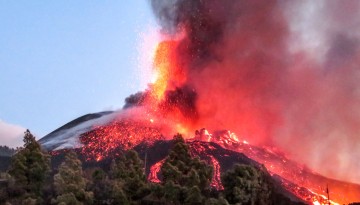
Far above the isle of La Palma in Spain’s Canary Islands, two Cornell scientists closely examined the airborne effects of the erupting Cumbre Vieja volcano.
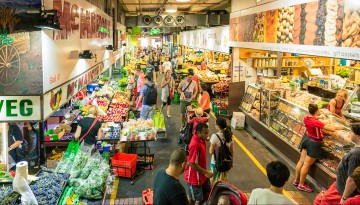
Researchers set out to model the probability of how often pairs of shoppers might overlap in a store – an approach that could be used to predict the transmission of COVID-19, and guide strategies to reduce its spread.
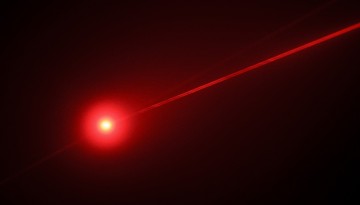
Researchers grew a thin film of one of the oldest known superconductors on top of a semiconductor, and for the first time measured the electronic properties of the junction between the two materials, paving the way for hybrid superconductor-semiconductor quantum devices.
A new artificial intelligence tool developed by Cornell researchers promises to help speed up searches for novel metastable materials with unique properties in fields such as renewable energy and microelectronics.
The new Bouriez Family Fellowship sponsors graduate students from French-speaking Africa as they pursue professional training in law or global development at Cornell. The fellowship is administered by the Einaudi Center's Institute for African Development.
The COVID-19 pandemic has shown humanity a new way to reduce climate change: Nix in-person conventions. Putting meetings online can reduce carbon footprints by 94%, says a Cornell study.
Around 1,450 Cornell students completed their studies this month. While the December Recognition Ceremony was canceled, some shared their university experiences.
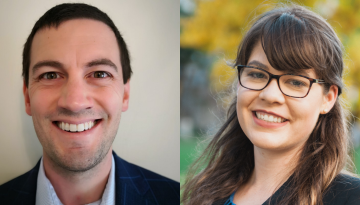
Marika Nell, Ph.D. ’20, and Kevin McDermott, Ph.D. ’19, began their doctoral programs hoping to work in academia but discovered policy careers along the way. They discuss how Cornell resources have shaped their path.
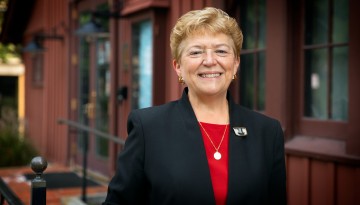
Dean of the Graduate School and Vice Provost for Graduate Education Kathryn J. Boor was named chair of a the Blue Ribbon Committee on Enhancing Coordination Between Land-Grant Universities and Colleges.