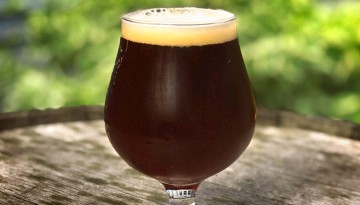
It’s got Finger Lakes hops, malt and cherries, plus Cornell maple syrup. Introducing ‘Gorges Libe-ation,’ a red ale developed by grad students and chock full of New York.
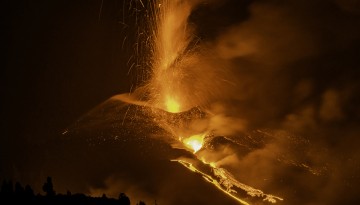
Associate professor Esteban Gazel and grad student Kyle Dayton will join a team of international researchers at the newly erupted Cumbre Vieja volcano in the Canary Islands.
Once a cosmic trickle a decade ago now appears as a rapid-fire barrage from across the universe, as 1,652 fast radio bursts were found in the Cornell-discovered FRB121102.
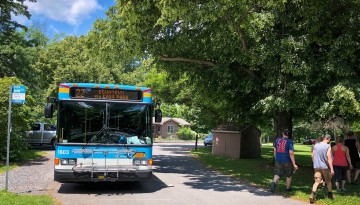
Enjoy area trails, parks, natural beauty and autumnal wonder, with no need for a car: Just lace up your hiking boots and leave the driving to the TCAT bus system.
Cornell researchers used advanced atomic modeling to explore the ways environment can influence the growth of cracks in alloys such as aluminum and steel – knowledge that could help engineers better predict, and possibly postpone, the failure of structures.
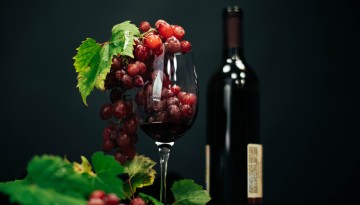
Cornell food scientists now show that the leftover pulp from the red wine making process has the potential to be a nutritive, illness-reducing treasure.
A small contribution from Tristan Lambert, professor of chemistry and chemical biology, when he was a doctoral student helped catalyze the breakthrough in catalysis that led to the 2021 Nobel Prize in chemistry.
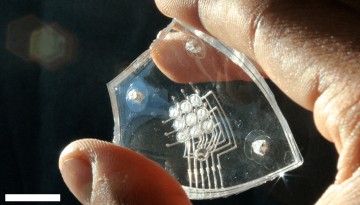
Researchers created a system that uses combustion to inflate silicone membrane “dots,” which could someday serve as a dynamic braille display for electronics.
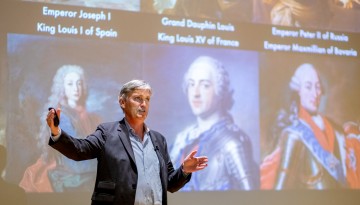
The collaborative nature of innovation was one of the key messages author Steven Johnson delivered during a campus visit Sept. 22, as a guest of the Milstein Program in Technology & Humanity.