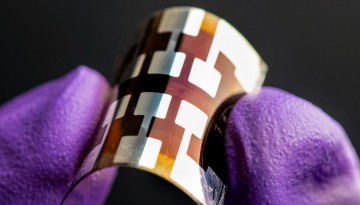
A Cornell-led collaboration received a $3 million grant from the U.S. Department of Energy to use machine learning to accelerate the creation of low-cost materials for solar energy.
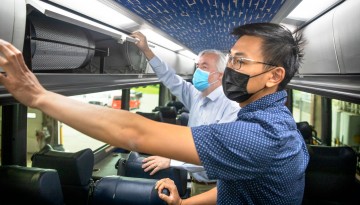
The Cornell Campus-to-Campus buses have resumed service thanks to a new air filtration system that was designed, built and installed by a team of faculty and staff, and at the center of the collaboration, a master’s student who decided to do something challenging with his summer break.
A new program provides undergraduates, graduate students and postdoctoral researchers from the College of Engineering and the College of Arts and Sciences with hands-on experience in developing innovative small spacecraft missions in high-priority areas of space science.
Doctoral candidate Karla García-Martínez and Professor of Immunology Cindy Leifer were selected as recipients of the 2021 Howard Hughes Medical Institute (HHMI) Gilliam Graduate Fellowships for Advanced Study.
A new Cornell engaged learning course, co-sponsored by the Rural Schools Association of New York State, aims to help under-resourced schools identify critical funding needs, then seek grant funds to support programming.
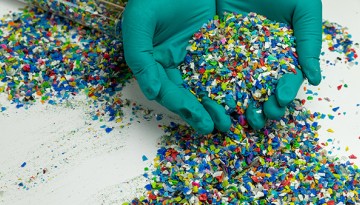
Cornell researchers created long chains of a polymer with high molecular weight and high tensile strength, resulting in a recyclable thermoplastic that is strong and flexible enough to be used for large-scale applications such as packaging products.