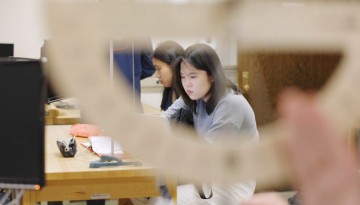
A recent study published in PLOS ONE found that career development offices benefit from collaborations and network development with industry employers, empowering doctoral and postdoctoral researchers.
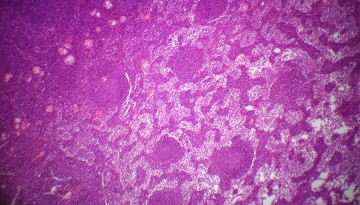
Cornell researchers have for the first time imaged the entire depth of the lymph nodes in a living mouse using three-photon microscopy, which enabled them to observe the dynamic interactions of immune cells.
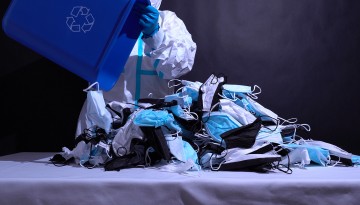
Forget incineration or landfills. To resolve the increasing, never-ending waste stream of medical PPE as a result of the pandemic, Cornell engineers suggest recycling via pyrolysis.
Cornell researchers have found a way to train physical systems, ranging from computer speakers and lasers to simple electronic circuits, to perform machine-learning computations, such as identifying handwritten numbers and spoken vowel sounds.
By graduation, humanities Ph.D. students often see only a path to a faculty or research career. The Graduate School offers programs to illuminate careers in industry, government, non-profits and more.
A team led by Natasha Holmes, the Ann S. Bowers Assistant Professor, set out to interview and survey physics undergraduates to see what role their preferences play in the well-documented gender disparities in physics lab courses.
The First Generation and Low Income Graduate Student Organization partnered with the Tompkins Cortland Community College to offer programming over the fall semester as part of their ongoing outreach initiatives.
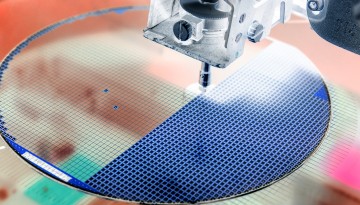
With a little twist and the turn of a voltage knob, Cornell researchers have shown that a single material system can toggle between two of the wildest states in condensed matter physics.
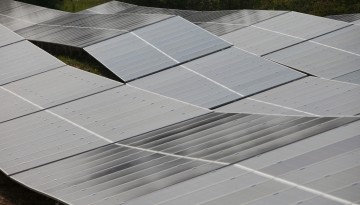
As New York prepares for a carbon-free energy future, public support for utility-scale solar farms is much lower than support for smaller solar projects, says new Cornell research.