Moshood Agba Bakare, a Ph.D. student in the field of plant breeding and genetics, has been awarded the Africa Fund Fellowship for graduate work focused on cassava breeding in sub-Saharan Africa.
A team from the College of Architecture, Art and Planning has put forth a new sustainability framework for injecting as much information as possible into the pre-design and early design phases of a project.
Future pandemics can be averted if the world’s governments eliminate unnecessary wildlife trade and adopt holistic approaches, according to experts at a Feb. 23 virtual conference.
Doctoral students Rob Swanda and Juliana González-Tobón have taken the internet by storm with their videos that take some of the mystery out of the COVID-19 vaccines.
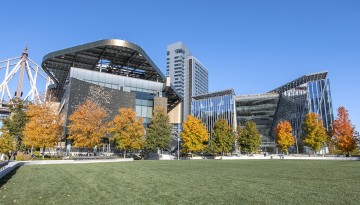
Finding innovative solutions for cities’ most pressing problems is a primary goal of the new Urban Tech Hub, part of the Jacobs Technion-Cornell Institute at Cornell Tech.
Olivia Adams ’14 M.Eng ’15 saw a problem: people in Massachusetts were having a difficult time signing up for COVID-19 vaccine appointments. So, she built a solution
Cornell researchers have created a low-cost method for soft, deformable robots to detect a range of physical interactions, from pats to punches to hugs, without relying on touch at all.
The seminar explores the ways in which women, people of color and others have been marginalized in science, technology, engineering and mathematics and how to address exclusion.