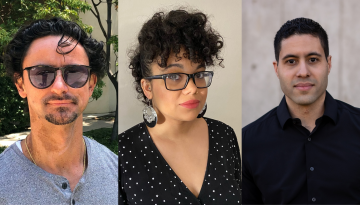
Edward A. Bouchet Graduate Honor Society members often remain committed to Cornell after earning their degrees, returning to mentor current graduate students, speak at workshops and forums, and participate in panels.
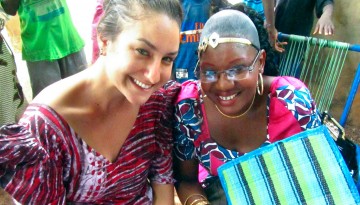
Like thousands of other Cornellians who have volunteered for the Peace Corps, Amanda Freund ’06 and Janet Smith, M.S. ’19, share common ground: learning from the people they served.
Two Graduate Teaching Fellows at the Center for Teaching Innovation developed and facilitated a training workshop for plant science teaching and lab assistants focused on inclusive teaching.
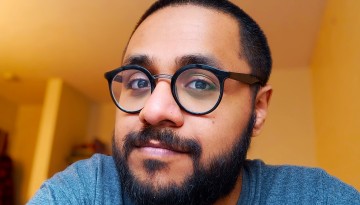
Bhargav Sanketi won Cornell’s 2021 Three Minute Thesis (3MT) competition. 3MT challenges graduate students to present their thesis research compellingly to general audiences in just three minutes.
Iterate Labs obtained funding for its artificial intelligence business that uses wearable sensors and computer vision to drive factory production and safety.
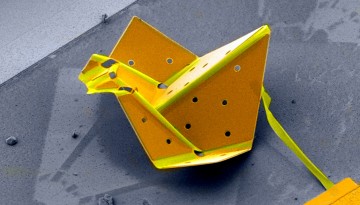
Cornell researchers have created what is potentially the world’s smallest self-folding origami bird by using micron-sized shape memory actuators to bend and hold its form.
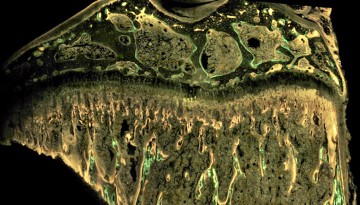
A Cornell-led collaboration has found that bones may grow in response to breast cancer tumors – possibly as a preemptive defense mechanism against metastasis. The findings could point the way to future diagnostic tests and therapeutic treatments.
A Cornell-led research team found that the rollout of nonessential business closures due to the pandemic led to an increase in engagement, across demographic groups, with a popular online learning platform.
Two doctoral candidates engaged scholars nationwide in a conversation about strategies to keep researchers safe while conducting fieldwork through a paper presentation and expert-led panel discussion.