By swiping surfaces in commercial food processing plants with specially designed swabs, spoilage and foodborne illness could diminish, according to Cornell research.
A concept addressing unaffordable and unsustainable funeral practices won first prize at the 11th annual Cornell Hospitality Business Plan Competition, an entrepreneurship event awarding cash prizes for the top three pitches.
A Cornell-led collaboration used X-ray nanoimaging to gain an unprecedented view into solid-state electrolytes, revealing previously undetected crystal defects and dislocations that may now be leveraged to create superior energy storage materials.
The Cornell Center for Social Sciences has awarded spring grants supporting research and conferences involving more than 30 faculty and researchers across campus, including collaborations within new and expanded superdepartments.
The Borlaug Global Rust Initiative announced its 2021 Jeanie Borlaug Laube Women in Triticum Early Career and Mentor awardees honoring wheat scientists working to protect food security around the world.
The College of Engineering hosted a first-of-its-kind virtual gathering on March 4 to welcome recently admitted engineering doctoral students from backgrounds traditionally underrepresented in the field.
Five doctoral candidates were inducted into the Cornell chapter of the Bouchet Graduate Honor Society, which recognizes outstanding scholarly achievement and promotes diversity and excellence in doctoral education.
Cornell researchers are using low-cost aluminum to create a rechargeable battery that is safer, less expensive and more sustainable than lithium-ion batteries.
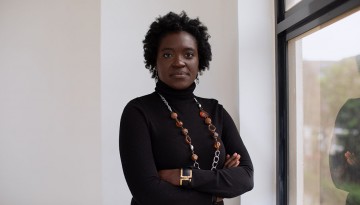
Writer, activist and political analyst Nanjala Nyabola will discuss her upcoming book as part ofGlobal Cornell’s Race and Racism across Borders webinar on April 12 at 11:00 a.m. Following the dialogue, Cornell students will present their original prose, poems and visual art.