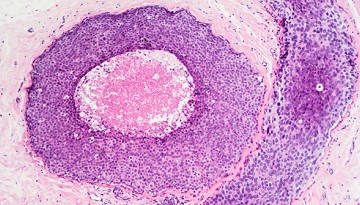
Weill Cornell Medicine investigators have identified definitive biological links between African ancestry and disease processes that affect an aggressive cancer type called triple-negative breast cancer.
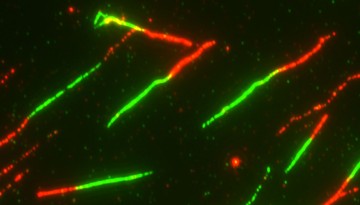
Researchers have uncovered a novel pathway that explains how cancer cells become resistant to chemotherapies, which in turn offers a potential solution for preventing chemo-resistance.
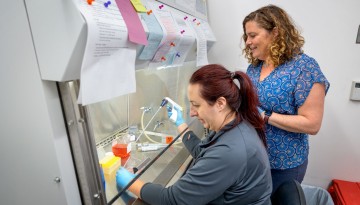
Paula Cohen, professor of genetics, is pioneering an innovative alternative to the birth control pill: a form of male contraception that targets a mechanism in the early stage of sperm cell production.
Six Cornell faculty members from three different colleges will work together to improve epidemiological models of infectious disease, including by better incorporating human behavior into the models, using a $1 million grant from the National Science Foundation.
A team of researchers has discovered a non-invasive biomarker that could aid with earlier diagnosis of breast cancer, the most common cancer among women, which will likely affect one in 13 women during their lives.
This is the largest federal grant ever awarded to Weill Cornell Medicine and the fourth consecutive time this initiative has been funded by the NIH, representing 20 years of continuous funding.
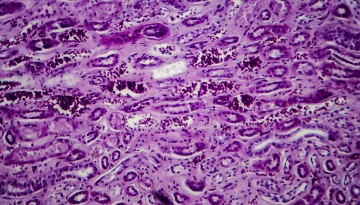
Immune cells called group 3 innate lymphoid cells play an essential role in establishing tolerance to symbiotic microbes that dwell in the human gastrointestinal tract, according to a study led by researchers at Weill Cornell Medicine.
Cornell is co-leading a five-year, $12.5 million grant from the National Science Foundation to form the IISAGE Biology Integration Institute aimed at identifying mechanisms and evolution of sex differences between females and males in aging.