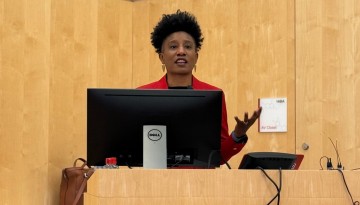
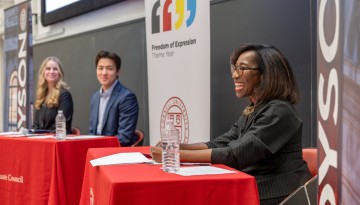
Kimberly Griffin, dean of the College of Education and professor of higher education at the University of Maryland, discussed the importance of making space for identity in mentoring relationships during the 2024 MAC Public Keynote.
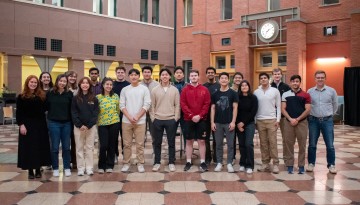
The Kessler Fellows program welcomed 20 students to its 2024 cohort. The students will spend their spring semester sharpening entrepreneurial skills while preparing for a fully funded summer internship at a startup of their choice.
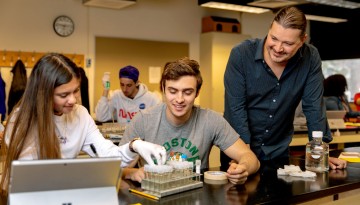
Researchers in the College of Agriculture and Life Sciences have created an “extension without penalty” system that features two assignment deadlines – an “ideal” and an EWP – and charted how the penalty-free extensions were used by students.
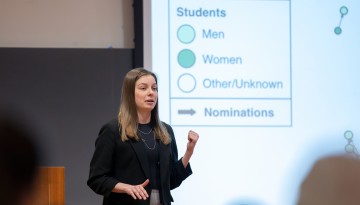
Meagan Sundstrom won Cornell’s Three Minute Thesis (3MT) competition. 3MT challenges graduate students to present their thesis research compellingly to general audiences in just three minutes.
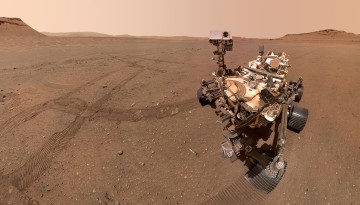
Samples of Martian rock and soil could be stranded if Congress doesn't adequately fund a NASA mission to retrieve them, Astronomy Chair Jonathan Lunine told a U.S. House subcommittee on March 21.
The SC Johnson College of Business has taken a creative approach to revamping their data analytics environment. With the help of Cornell Information Technologies, they launched “Connect360,” the goal of which was to extract, organize, analyze, and present targeted graduate admissions data, which comes from multiple source systems, in a unified dashboard.
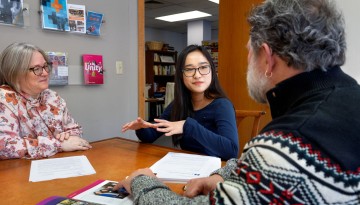
The Community Work-Study Program enables Cornell undergraduates with federal work-study as part of their financial aid package to work for local nonprofits, schools and municipalities.
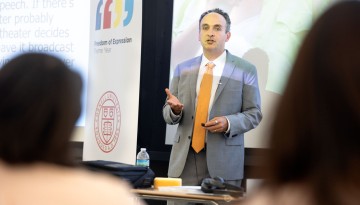
Cybersecurity expert Jeff Kosseff said in a talk at Cornell Bowers CIS that the constitutional right to lie extends to every American, so long as the high judicial bar for fraud, defamation or another narrow category of speech isn’t met.
Corporations are caught in a bind when it comes to social issues, Natalie R. Williams ’86 said during the Charles H. Dyson School of Applied Economics and Management Dean’s Distinguished Lecture on March 12 in Warren Hall.