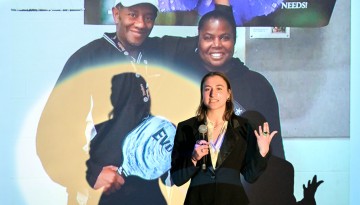
Top honors at the Grand Challenges Pitch Competition went to the students working with the alumna-owned Pickleball Mania, offering space in the Ithaca Mall to play the fastest growing racket sport in America.
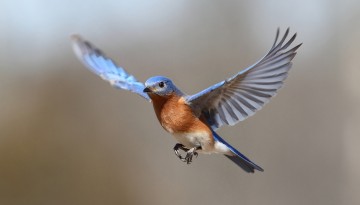
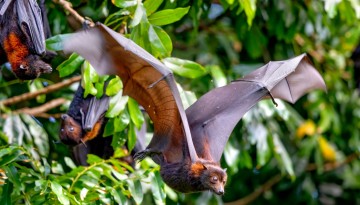
Researchers plan to measure the impact of the April 8 solar eclipse on the movements of birds, bats and insects – flying creatures that are very attuned to changes in light levels.
While world public health agencies are focused on how to react to the next pandemic once it has started, a new plan proposes using ecological perspectives to prevent disease outbreaks before they happen.
The newest episode of a podcast hosted by Entrepreneurship at Cornell, Startup Cornell, features Peyton Johnson, a member of the Class of 2024 and founder of a company that helps students find off-campus housing.
Cornell engineers say that pairing crypto mining – notable for consuming carbon-based fuel – with green hydrogen could provide for wider deployment of renewable energy, such as solar and wind power.
The Cornell and Ithaca communities can see a unique blend of mime and mathematics during two days of events planned by the Cornell Department of Mathematics April 19 and 20.
The Cornell Board of Trustees has approved parameters for the 2024-25 budget, including financial aid, tuition, housing and dining rates for the coming year.
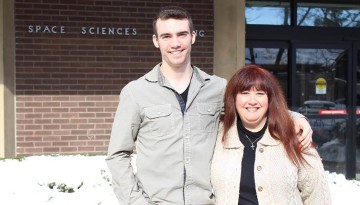
Mary Mulvanerton, long-time department manager for the Department of Astronomy and associate director of the Cornell Center for Astrophysics and Planetary Science (CCAPS), passed away on March 6 at the age of 64.
By studying individuals who spontaneously clear hepatitis C infections, a team of researchers has identified viable vaccine targets for a disease that infects 70 million worldwide.