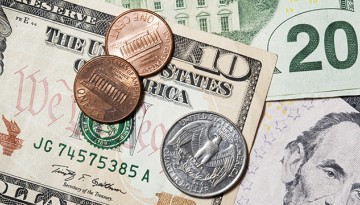
Researchers from the Cornell SC Johnson College of Business found that for some charitable donors, the extra incentive of a gift is an important lever for opening pocketbooks, and advertising it prominently can help charities increase giving.
Many firms are opting for ready-made AI technology that can be tailored to the specific needs of the firm, according to a research team that included Chris Forman, professor in the Dyson School of Applied Economics and Management.
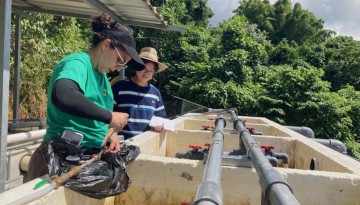
Cornell Engineering is leading an initiative to help small communities in Puerto Rico finance, build and operate clean drinking water systems, with the goal of expanding the project to other U.S. locations.
A collaboration between researchers from Cornell and the University of Pennsylvania found that most successful deep neural networks follow a similar trajectory in the same “low-dimensional” space.
A cross-college collaboration is opening new doors in the study of male infertility by breaking down a key step in sperm formation. Isolating the intricacies of meiotic sex chromosome inactivation, will now enable researchers to identify what happens when that key step fails.
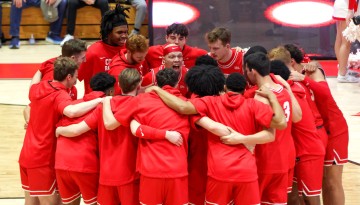
A radical shift in playing style has helped fuel a Cornell men’s basketball resurgence. The Big Red has posted its third straight winning season and is the No. 3 seed heading into this weekend’s Ivy League Tournament, at Columbia.
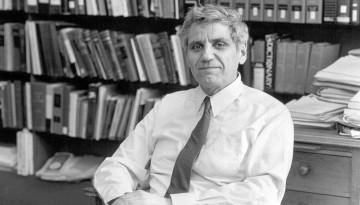
Faust F. Rossi, J.D. ’60, the Samuel S. Leibowitz Professor of Trial Techniques Emeritus and a revered educator, mentor and legal scholar, died March 6 in Bethesda, Maryland. He was 91.
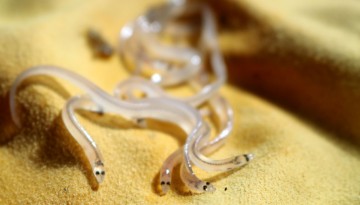
The Hudson River Eel Project – which has netted, counted and released roughly 2 million juvenile eels since its inception in 2008 – owes its success to a cadre of nearly 1,000 high school, college and adult citizen scientists donating time and effort each spring along the Hudson River.
Raising New York state’s minimum hourly wage to $21.25, as proposed in the NYS Raise the Wage Act currently before the state Legislature, would help nearly two-thirds of workers earn a living wage, according to data from the Cornell ILR Wage Atlas.