The initiative has supported faculty initiatives ranging from a project to design indigenous seed storage; a documentary on rural LGBT life; and the development of architectural designs for a new elderly center for the Onondaga Nation.
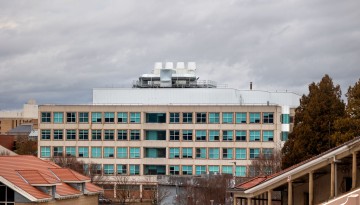
Campus engineers have verified that the building – tailored for energy efficiency, including a recent retrofit of four rooftop exhaust stacks to recover heat – now saves the university nearly $670,000 a year.
Male teaching assistants are more likely to receive higher ratings than their female counterparts, and both genders are perceived as more valuable when exhibiting traits historically associated with their respective roles in society, a Cornell study finds.
Madison Savilow, chief of staff at Carbon Upcycling, talked with Andrea Ippolito ’06, M.Eng. ’07, director of W.E. Cornell, about the burgeoning carbon utilization industry in a fireside chat co-hosted by W.E. Cornell and the Atkinson Center.
Julia Fritsch ’25, Cristina Kiefaber ’25, and Ashley Koca ‘25 have been selected as the 2024 Harry Caplan Travel Fellows, supported by the Department of Classics.
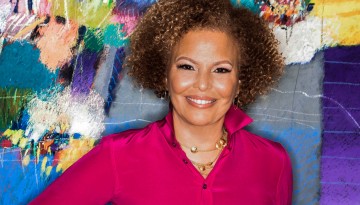
Debra Lee, former CEO of Black Entertainment Television, spoke to the Cornell community Feb. 20 about her journey from growing up in the segregated South to shattering glass ceilings while becoming one of the most powerful businesspeople in America.
Researchers studying large-scale artificial intelligence, microbial biomanufacturing and causal inference methods are among the Cornell researchers who recently received National Science Foundation Faculty Early Career Development Awards.
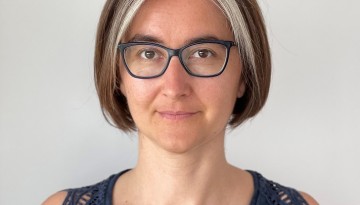
During three events March 13-15, Lenka Zdeborová will explore how principles from statistical physics provide insights into challenging computational problems.