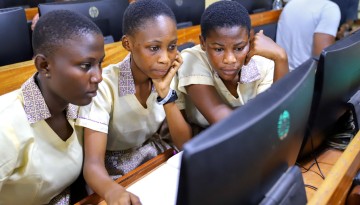
Ghana’s fledgling tech sector has a chicken-and-egg problem: To grow, it needs trained, local workers, but without existing job opportunities, students don’t pursue degrees in computer science.
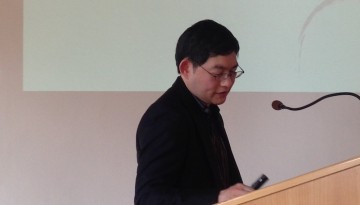
“Beyond the World as Picture: Worlding and Becoming the Whole World [devenir tout le monde],”will examine philosophical accounts of the ways in which we organize the concept of reality.
A $7 million restoration of the tower and Uris Library, underway since summer 2023 and expected to be completed in November, includes replacing roofs, repairing masonry and shoring up a century-old entryway.
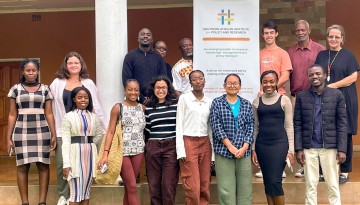
Panelists who have studied in countries ranging from Denmark to Singapore will speak about their perspectives on gender, sexuality, race and identities that impacted them while abroad during an upcoming global freedom of expression event.
Researchers developed a semiconductor chip that will enable ever-smaller devices to operate at the higher frequencies needed for future 6G communication technology.
Calling for loyalty to a group, rather than to an individual, was more effective in eliciting followers’ compliance with unethical requests, Johnson School researcher Angus Hildreth found.
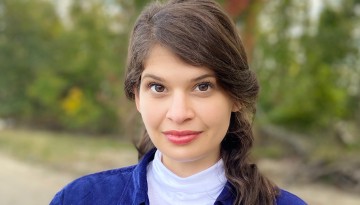
In “The Riddles of the Sphinx: Inheriting a Feminist History of the Crossword Puzzle,” media scholar Anna Shechtman combines a history of the crossword highlighting its early women innovators with her memoir of a personal challenge.
Blocking the formation of filaments – multi-enzyme structures that fuel cancer activity – may offer new ways to control cancer cell proliferation, according to a new study led by Cornell researchers.