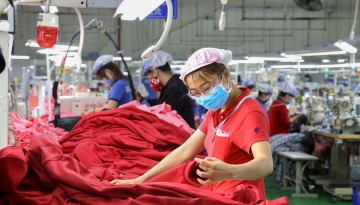
Extreme heat and flooding are threatening key international apparel hubs, with four countries vital to the fashion industry facing losses of 1 million jobs and $65 billion in earnings by 2030, according to two new ILR School reports.
A new “Religions on the Move” lecture series kicks off Sept. 28 with "'Make the Sound the Creator Is Waiting for Us to Make': Native American Anti-Nuclear Activism."
The recommendations include a range of actions for how Cornell can best enroll academically excellent classes in ways that advance the university’s unique ethos and mission.
Cornell University Library will present two events, a talk by advice columnist Amy Dickinson and an exhibit opening, celebrating psychologist and media personality Joyce Brothers ’47.
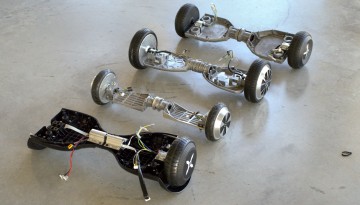
Incorporating sustainability into their field, Cornell information science researchers Ilan Mandel and Wendy Ju introduce “garbatrage,” a framework for prototype builders centered around repurposing underused devices.
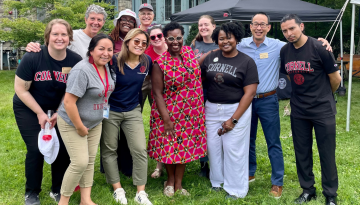
The Centers for Student Equity, Empowerment, and Belonging combines six existing offices, a change meant to strengthen connections for students and groups navigating the offices, and emphasize the intersections of students' varied identities.
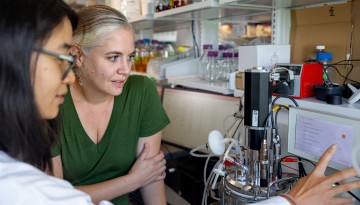
The program helped Alexa Schmitz, Ph.D. ’18, and colleagues explore the market potential for their sustainable way of extracting rare earth elements used in many electronics.
The National Academies’ latest decadal survey, “Thriving in Space,” released Sept. 12, provides a roadmap for biological and physical sciences research, from the low orbit of Earth to the surface of Mars, through 2033.
Cornell’s Scientific Computing Training Series will resume on Oct. 4; the Zoom-based training is available for free to faculty, students and staff at Cornell, Weill Cornell Medicine, Weill Cornell Medicine-Qatar and Cornell Tech.