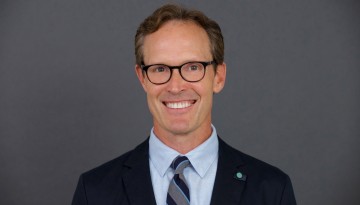
Nobel Prize-winning physicist Carl Wieman will visit campus Sept. 25-29 as an A.D. White Professor-at-Large, working with students and faculty and offering a public talk about his work in science education.
The newly upgraded Linac Coherent Light Source X-ray free-electron laser at the Department of Energy’s SLAC National Accelerator Laboratory has produced its first X-rays, and researchers are ready to kick off an ambitious science program.
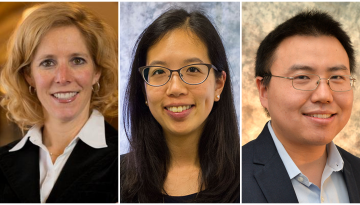
The first JFI-Brooks Fellowships scholars will research regulatory frameworks for artificial intelligence and the long-term impact of welfare reform-era policy changes on recipients and their children.
With a focus on the prairie vole, Alexander Ophir will study mating tactics in mammals to learn about the underlying neural sources of social behaviors.
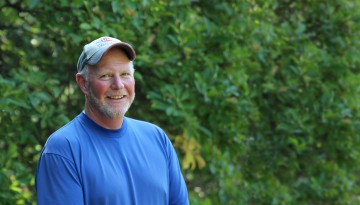
Cornell University Agricultural Experiment Station (Cornell AES) employee Rick Randolph has been chosen as the new manager of the Homer C. Thompson Vegetable Research Farm in Freeville, NY.
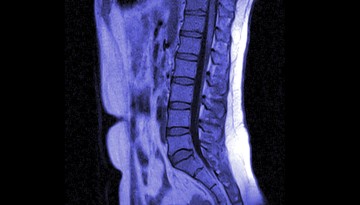
The bones that form the spine are derived from a distinct type of stem cell that secretes a protein favoring tumor metastases, according to researchers at Weill Cornell Medicine, a discovery that opens up a new line of research on spinal disorders.
Ben Maddox, the chief academic technology officer at New York University, has been named chief information officer for Cornell’s Ithaca campus and Cornell Tech.