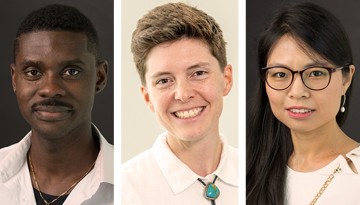
This year, thirty-four new faculty enrich the College of Arts & Sciences with creative ideas in a vast array of topics, including quantum materials, artificial intelligence, moral psychology and misinformation.
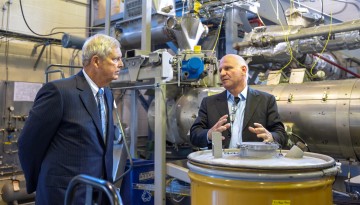
U.S. Agriculture Secretary Tom Vilsack visited the College of Agriculture and Life Sciences on Sept. 6 to discuss programs focused on empowering farmers and finding new climate solutions that are equitable and science-based.
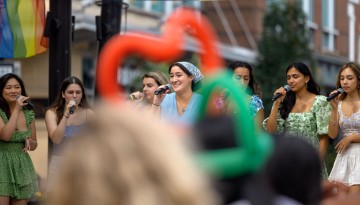
The CU Downtown event, a celebration to welcome new students, has merged with Ithaca College and Tompkins Cortland Community College for the first time to create one grand event for 2023: Welcome Student Weekend.
The beneficiaries of “positive bias” due to racial profiling and other types of favoritism are more likely to recognize it and take corrective action if their attention is drawn to the victims of that bias, new Cornell research has found.
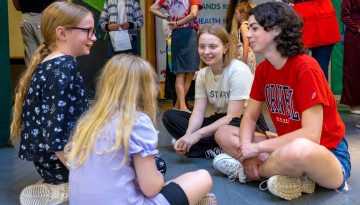
Designs by 4-H youth hit the runway at the 4-H Fashion Revue at the New York State Fair, with Cornell students and faculty inspiring the young fashion designers with feedback and discussions about design thinking and innovation.
As the world seeks to avoid climate extremes, employing state-of-the art agricultural technology could result in more than 13 billion tons of net negative greenhouse gas emissions annually.
Sonnet Kekilia Coggins, executive director of the Merwin Conservancy, will explore the life and legacy of W.S. Merwin in the Torrence Harder Lecture, “What is a Garden? W.S. Merwin’s Life in Poems, Palms, and Place,” Sept. 13 in Call Auditorium.
Cornell researchers unexpectedly discovered the presence of “quantum spin-glass” while conducting research designed to learn more about quantum algorithms and, relatedly, new strategies for error correction in quantum computing.
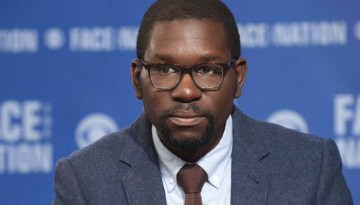
Jamelle Bouie, columnist for the New York Times, will be the featured speaker at the 2023 Daniel W. Kops Freedom of the Press Lecture, Sept. 12 at 5 p.m. in Klarman Hall’s Rhodes-Rawlings Auditorium.