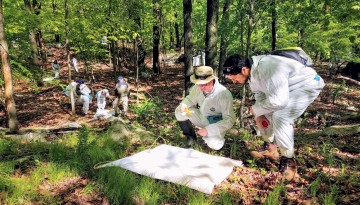
A project headed by Christine L. Goodale, professor of environmental sciences, and funded by the Department of Energy will contribute to understanding of the role the nitrogen cycle plays in estimates of future carbon uptake by the biosphere.
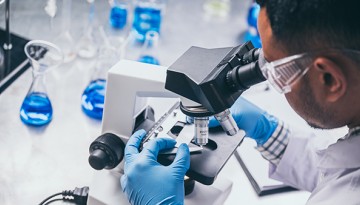
The Northeast Regional Center for Excellence in Vector-Borne Diseases, led by Cornell, has received a five-year, $8.7 million award from the Centers for Disease Control and Prevention to train and educate vector-borne disease professionals.
Cornell University’s Life Sciences Technology Innovation Fellowship, formerly known as the BioEntrepreneurship Initiative, enters its second year in 2023-24 with a new cohort of 15 business students and 12 researchers.
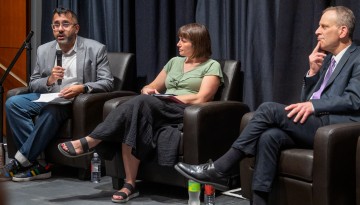
A forum hosted by Cornell Law School on Sept. 7, “The Fundamentals of Freedom of Expression,” served as the kickoff event for the academic year’s theme, “The Indispensable Condition: Freedom of Expression at Cornell.”
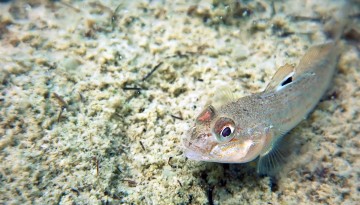
The genetic material that species shed into their environments can reveal the presence of the species and a broad range of information about the genetics of entire populations.
A university committee has released recommendations for how faculty can take generative artificial intelligence into account when considering learning objectives for their students.
The $1.7 million grant will help scientists with expertise in artificial intelligence and machine learning to address complex biomedical challenges in nutrition and health.