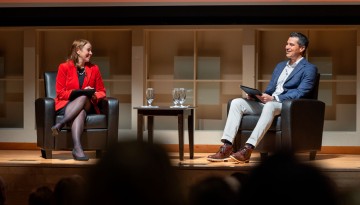
Speaking to trustees, alumni volunteers and university leaders, Dean Colleen Barry described ambitious, public-minded goals for the new Cornell Jeb E. Brooks School of Public Policy at Cornell Leadership Week.
A Cornell-designed probe shows how water vapor penetrates powders and grains – a finding that could have wide-ranging applications in pharmaceutical research, agriculture and food processing, and planetary exploration.
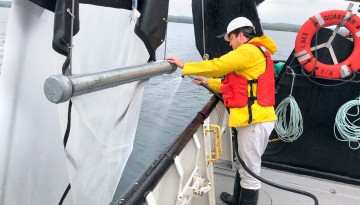
Cornell received the grant to continue efforts to monitor and research the lower part of the food web, particularly zooplankton like Mysis and benthic invertebrates.
Students aim to reduce aviation emissions, support farmworkers and improve a New York animal shelter with the David M. Einhorn Center for Community Engagement’s Serve in Place awards.
The Well-being and Mental Health Fund will offset costs associated with curricular adjustments already underway and programmatic efforts at the College of Veterinary Medicine.
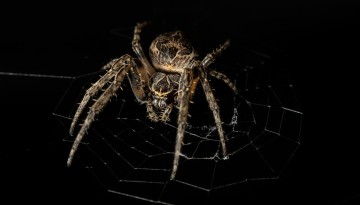
A study of orb weaver spiders finds their massive webs act as auditory arrays that capture sounds, possibly giving spiders advanced warning of incoming prey or predators.
M.H. Abrams Distinguished Visiting Professor, poet and theorist Fred Moten will deliver a lecture on radical Black politics and the poetry of Amiri Baraka.
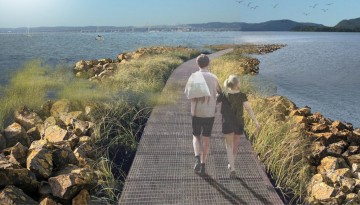
With the Hudson River rising from a fast-warming climate, the cities and towns along its banks now have an opportunity to save and reimagine their municipal waterfronts.