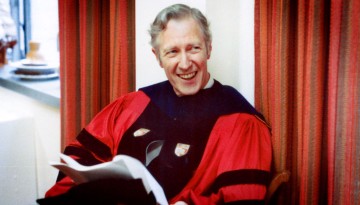
More than two years after the death of Frank H.T. Rhodes – Cornell’s ninth president, beloved for his leadership and eloquence – his family and friends gathered March 26 to celebrate his life.
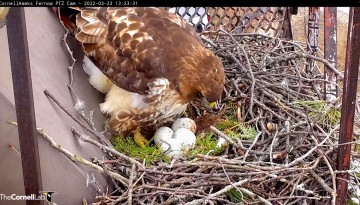
For the first time since the Lab of Ornithology installed a live camera on the nest in 2012, Big Red, the female red-tailed hawk, has produced a fourth egg during breeding season.
A Boyce Thompson Institute scientist has developed an app that integrates multiple data analysis features into a single, easy-to-use tool for the metabolomics community.
Local officials, graduate students and faculty held a simulation exercise at the Cornell Jeb E. Brooks School of Public Policy on March 12 to work through questions around autonomous vehicles.
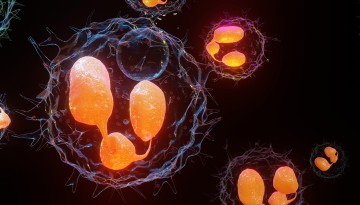
New research finds that cells are much more precise in how they ingest substances than previously thought, opening the door to potential treatments for several diseases.
Developing a skill such as public speaking can be uncomfortable and difficult, but new research shows that instead of avoiding embarrassment, seeking it out can actually result in better motivation and personal growth.
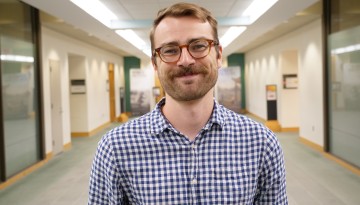
Bruno Shirley won Cornell’s Three Minute Thesis (3MT) competition. 3MT challenges graduate students to present their thesis research compellingly to general audiences in just three minutes.
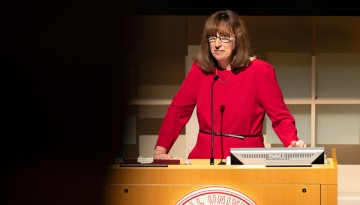
Despite the challenges of the pandemic, Cornell has been extraordinarily productive in the past 17 months, President Martha E. Pollack said at her State of the University address March 26.
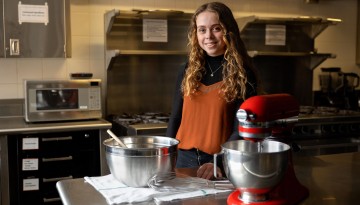
Cassidy Tryon won Food Network’s “Chopped Junior” at age 12, shortly before being diagnosed with Crohn's disease. She's now studying food science at Cornell while continuing to master cooking for her diet.