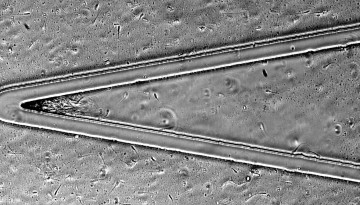
Forget sending bull semen out for complicated laboratory tests to learn whether the agricultural animal is virile. Cornell scientists have developed a faster, easier microfluidics method.
Cornell is establishing a new division that will integrate its public safety services and units on the Ithaca campus into a single organization, creating a comprehensive approach that prioritizes transparency and empathy in recruitment, training and operations.
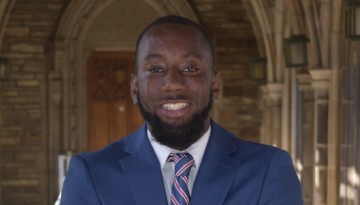
Cornell’s next chief of police, Anthony Bellamy, discusses the career path that led to his new post, his vision for CUPD and how he wants to make himself available to the campus community.
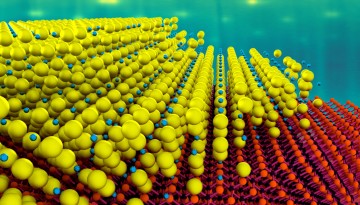
A team of researchers at Cornell’s Center for Bright Beams has developed a technique to address limitations with photocathodes, which are vital to the performance of some of the world’s most powerful particle accelerators.
The chapter, "AI and International Politics," is a broad look at the opportunities and risks that the proliferation of AI technology holds for international politics.
Mar’Quon Frederick will spend the summers of 2022 and 2023 in Washington, D.C., participating in internships, seminars on government and economics, and leadership and professional development workshops.
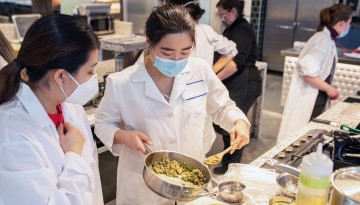
Students are now taking classes the Discovery Kitchen, a state-of-the-art teaching space built into the ground floor of Toni Morrison Hall on North Campus.