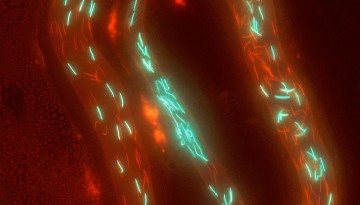
Long considered exclusively male, a new study revealed that by four days after a sperm enters a female fruit fly, close to 20% of its proteins are female-derived.
By the end of this century, Cornell’s Flavio Lehner and others said that megadroughts – extended drought events that can last two decades – will be more severe and longer in the western U.S. than they are today.
Formerly incarcerated men deal with uncertainty around whether to use their prison credentials or not when searching for work, according to new findings from Brooks sociologist Sade Lindsay.
A new study shows that it pays to pool finances if you’re seeking a higher level of satisfaction, harmony and commitment in your serious relationship or marriage.
The Active Learning Initiative has announced its Phase IV grants. The winning proposals, from Classics, Government, History, the Sibley School of Mechanical and Aerospace Engineering, and the Meinig School of Biomedical Engineering, included collaborations that extend across Cornell.
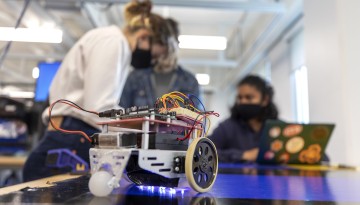
From agriculture to AI to healthcare, Cornell Tech alumni are driving social change. Read about three recent graduates who showcase a few of the creative ways alumni are using their Cornell Tech degree.
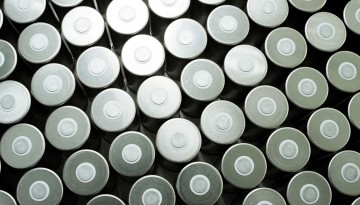
A nitrogen doped carbon-coated nickel anode can catalyze an essential reaction in hydrogen fuel cells at a fraction of the cost of the precious metals currently used, Cornell researchers have found.
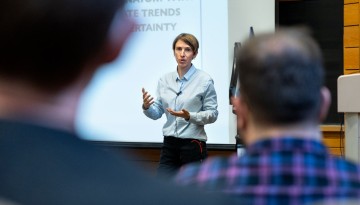
On March 15, award-winning science journalist Natalie Wolchover, Zubrow Distinguished Visiting Journalist in the College of Arts and Sciences, gave a master class on “Bringing Science to Life Through Storytelling” in Lewis Auditorium.