A new interdisciplinary research project is designed to unlock the power of wind energy by optimizing the spacing between wind turbines and wind turbine arrays to maximize power production.
Small-scale farmers see a path to solving global hunger over the next decade, thanks to a Cornell-hosted project that used artificial intelligence to cull ideas from more than 500,000 scientific research articles.
Three New York state companies have been chosen to participate in the Cornell Center for Materials Research JumpStart Program, through which they will collaborate with faculty members to develop and improve their products.
Shu-Bing Qian, a professor of molecular nutrition whose work explores how genetic information gets translated in order to make proteins in cells, has won a National Institutes of Health Director’s Pioneer Award.
Graduate students in six fields of study have designed an evolution lesson on speciation for undergraduate non-majors that applies active-learning techniques. The lesson was published in CourseSource.
A new study in mice identifies a gene that is critical for short-term memory but functions in a part of the brain not traditionally associated with memory.
The Cornell Alliance for Science is expanding its mission of science communication and advocacy and broadening its commitment to diversity and inclusion thanks to $10 million in new funding from the Bill & Melinda Gates Foundation.
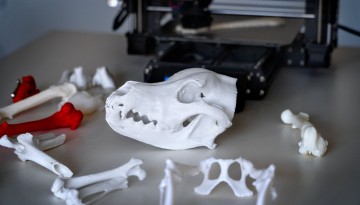
First-year veterinary student Sean Bellefeuille’s startup creates anatomical models of animals with a 3D-printer. These models help veterinary surgeons better prepare for surgery on their patients.