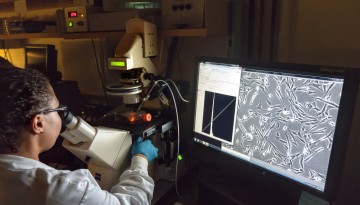
Susan Daniel and Gary Whittaker discuss their collaborations and others across Cornell’s campuses that are working to better understand the COVID-19 virus.
Cornell Atkinson has awarded seven Academic Venture Fund seed grants, totaling $1.1 million, for projects that engage faculty from eight Cornell colleges and 16 academic departments.
A Cornell-led team of researchers field-tested 14 active ingredients in insecticides, applied in a variety of methods, to understand the best treatment options against the Allium leafminer, a growing threat to onions, garlic and leeks.
Veterinarian Gerlinde Van de Walle studies diverse issues in animal health, from viruses and stem cells in companion and livestock animals such as cats and horses to mammary cancer in mammals.
Alan Sulpizio, a graduate student studying biochemistry and molecular and cellular biology, is the newest recipient of the Harry and Samuel Mann Outstanding Graduate Student Award.
New research that looked at the development of Arabidopsis flowers addressed the fundamental question of how two or more organs or plant parts grow to the same size and shape, which is essential for proper function.
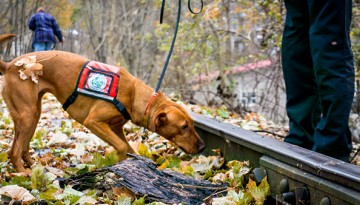
New Cornell-led research shows that inadequate funding is the main barrier to better surveillance and control of ticks, including the blacklegged tick, which spreads Lyme disease, the No. 1 vector-borne illness in the country.
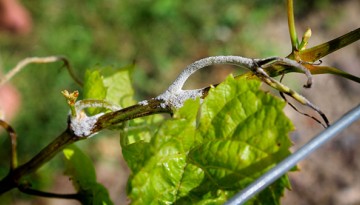
A project led by Kaitlin (Katie) Gold, assistant professor of plant pathology and plant microbe-biology at Cornell AgriTech, to study grape downy mildew has received a $100,000 USDA Specialty Crop Block Grant.