The Cornell Veterinary Biobank has received a $2.5 million federal grant to process, store and distribute biological samples for the Dog Aging Project, a massive national effort to study aging in dogs – and humans.
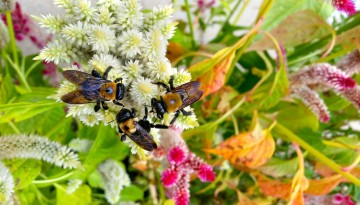
One in 11 flowers carries disease-causing parasites known to contribute to bee declines, according to a Cornell study that identifies how flowers act as hubs for transmitting diseases to bees and other pollinators.
A multidisciplinary, Cornell-led team of scientists will study how plant pathogens that travel the globe with dust particles might put crops at risk, especially in places where people struggle to eat.
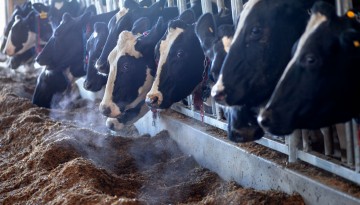
A new open-source computer model being developed by a Cornell-led interdisciplinary team will simulate production and quantify the environmental effects of management decisions made on dairy farms.
Buddy, a 13-year old briard rescue dog, is one of three dozen dogs in an ongoing study on treating persistent gastrointestinal problems with changes in their diets. The results so far have been remarkable.
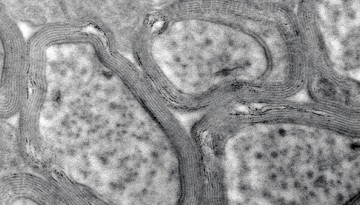
Fenghua Hu is researching factors that cause Alzheimer’s and similar diseases. Her new study shows the role that one particular gene plays in protecting the central nervous system via the formation and maintenance of the myelin sheath.
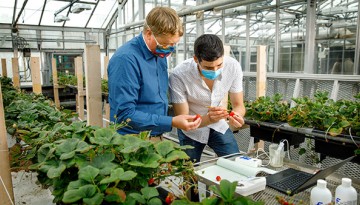
Thanks to a grant from the USDA, horticulture experts in the College of Agriculture and Life Sciences will help design new training programs for workers in controlled environment agriculture.
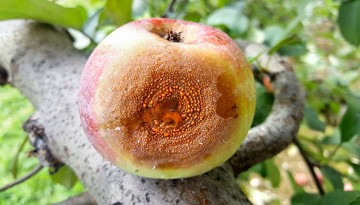
In a study of New York state apple orchards, Cornell plant pathologists have identified a new fungal pathogen that causes bitter rot disease in apples.
A new male fertility test based on Cornell research could help predict which men might need treatment and which couples might have success with different forms of assisted reproduction.