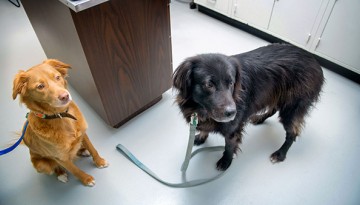
Researchers from Weill Cornell Medicine and the College of Veterinary Medicine are expanding the potential of precision medicine for canine and human patients, by studying a lymphoma that occurs in both people and dogs.
The virtual panel, “One Health: Cornell’s Collaborative Approach to Ensuring Human, Animal and Ecosystem Health in the Time of COVID-19,” was held June 6 as part of Cornell’s Reunion weekend.
An analysis of high-speed raindrops hitting biological surfaces such as feathers, plant leaves and insect wings reveals how these highly water-repelling veneers reduce the water’s impact.
Dr. Lorin D. Warnick, Ph.D. ’94, the Austin O. Hooey Dean of Veterinary Medicine, has been appointed to a second five-year term, effective July 1, 2021.
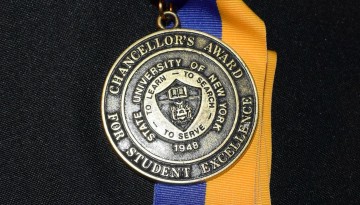
Sixteen faculty and professional staff members in state contract colleges at Cornell are receiving the 2019-20 State University of New York Chancellor’s Awards for Excellence.
A research team led by Jeongmin Song from the College of Veterinary Medicine was able to vaccinate mice effectively against tyhpoid by exposing them to a closely related bacteria.
Bacteria are growing increasingly antibiotic-resistant, but new research reveals how certain enzymes could be exploited to develop new classes of drugs to fight bacterial infections.
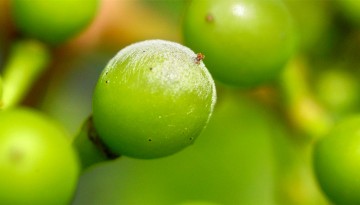
Robots fitted with ultraviolet light lamps that roam vineyards at night are proving effective at killing powdery mildew, a devastating pathogen for many crops, including grapes.