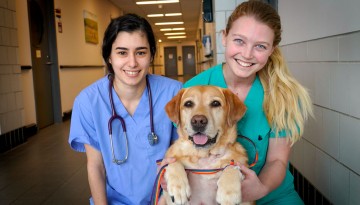
A team of doctors from the College of Veterinary Medicine and Weill Cornell Medicine performed rare canine open-heart surgery to save Lucy, a 7-year-old yellow Labrador retriever.
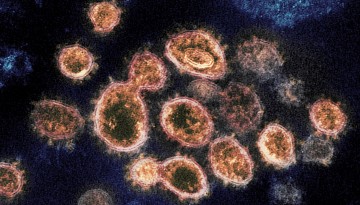
A Cornell study of the structure of SARS-CoV-2, the virus that causes COVID-19, reveals a unique feature that could explain why it is so transmissible between people.
Cornell scientists have developed a new technique for imaging a zebrafish’s brain at all stages of its development, which could have implications for the study of human brain disorders, including autism.
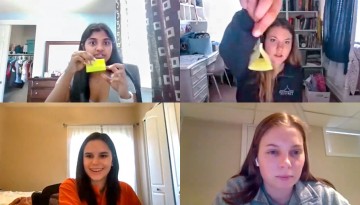
The coronavirus pandemic has forced Cornell instructors to rethink how they teach lab classes, as remote learning has created special challenges for courses considered more hands-on, collaborative and experiential.
A Cornell senior research associate served as a consultant to members of the New York State Senate on the Outdoor Rx Act, a bill that seeks to make it easier for veterans to access New York state’s scenic and restorative outdoor spaces.
A Cornell researcher is part of a multi-institution team helping upstate New York organic farmers grow and increase profitability of perennial grain crops, which can be planted once and will yield grain for multiple years.
Wildlife veterinarian Steven Osofsky finds ways to allow wild animals such as zebra and wild buffalo to rediscover ancient migration routes through southern Africa while helping cattle farmers to make a living.